

Nextly featuresStart with the core. Add what you need.
Nextly is an open-source content platform for Next.js.
MIT licensed, self-hosted. Runs inside your own Next.js app, on your own PostgreSQL or MySQL database, or SQLite for local work.
Every feature here ships in 0.0.2-alpha.72. Each one links to the page or the docs that say where it stops.
npx create-nextly-app@alpha my-app- Package
nextly- Official plugins include
@nextlyhq/plugin-page-builder,@nextlyhq/plugin-seo,@nextlyhq/plugin-form-builder- Release
0.0.2-alpha.72· 27 Oct 2026- Licence
- MIT
- Runs in
- Your own Next.js app, self-hosted
- Databases
- PostgreSQL 15+, MySQL 8+, SQLite 3.38+ for local work
- Requires
- Node.js 22.12+ or 24+; Next.js 16 with the App Router; React 19
- APIs
- The Direct API and REST
The admin, screen by screen
Every screen on this page is the Nextly admin, captured on 0.0.2-alpha.69.
Model content
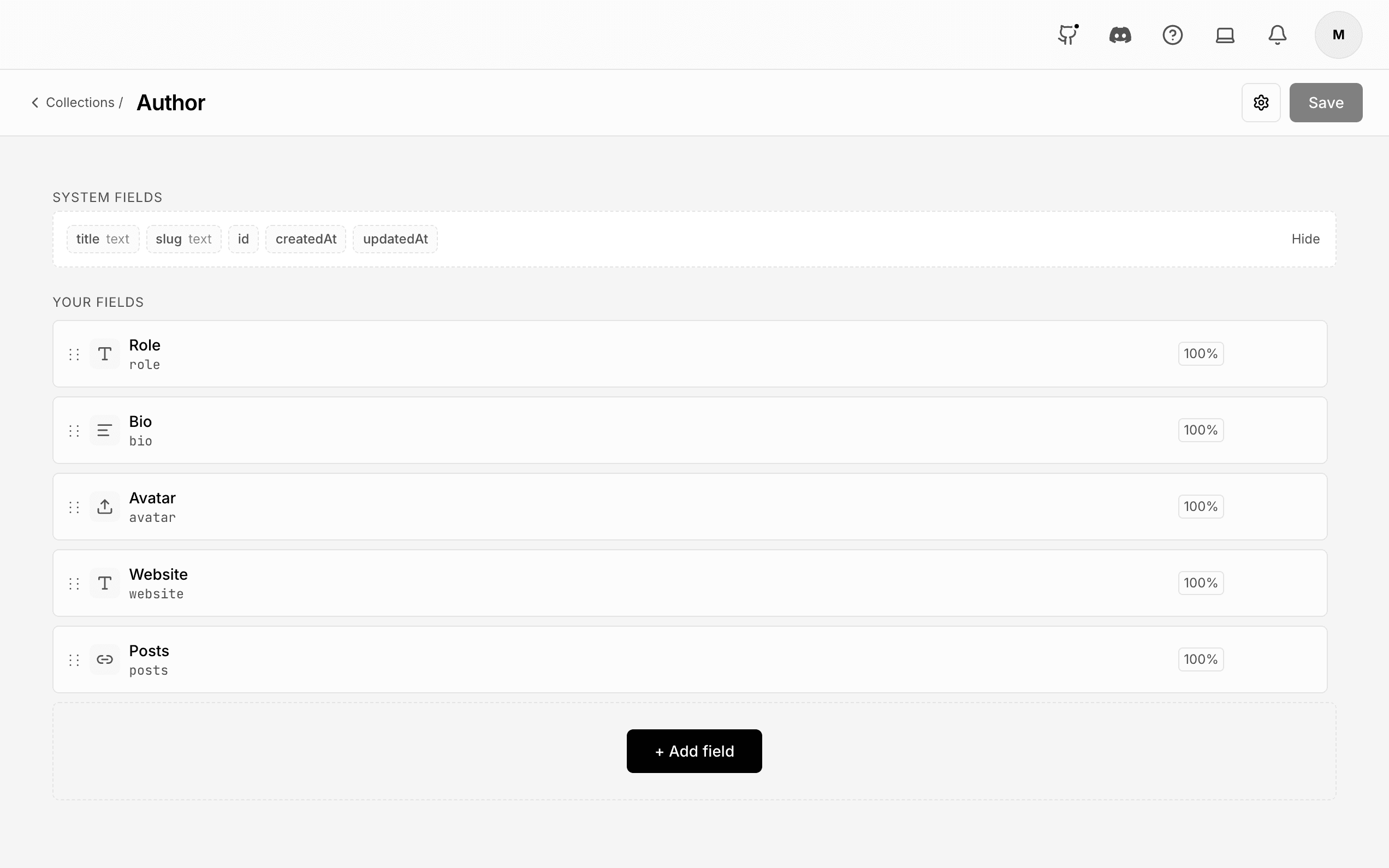
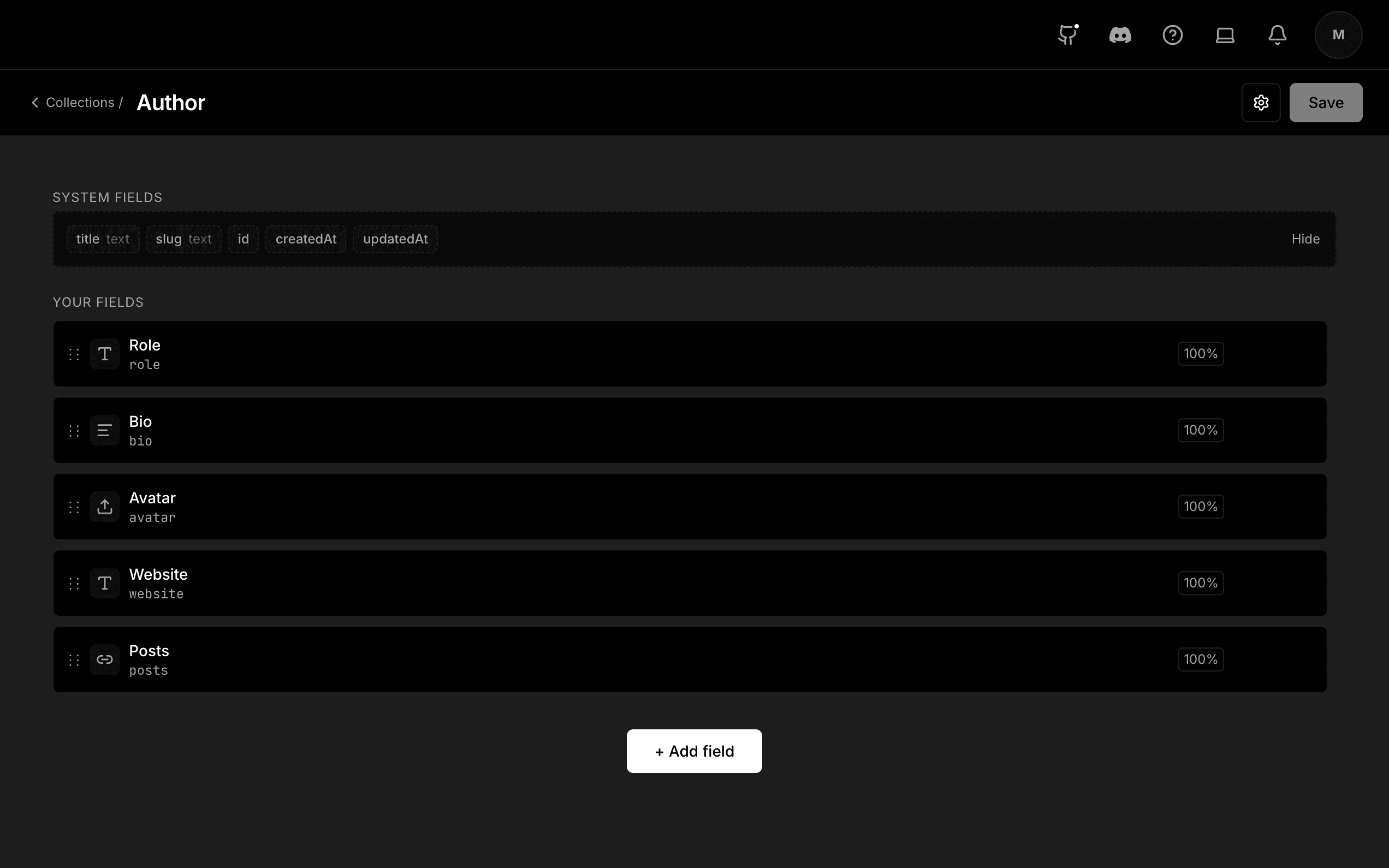
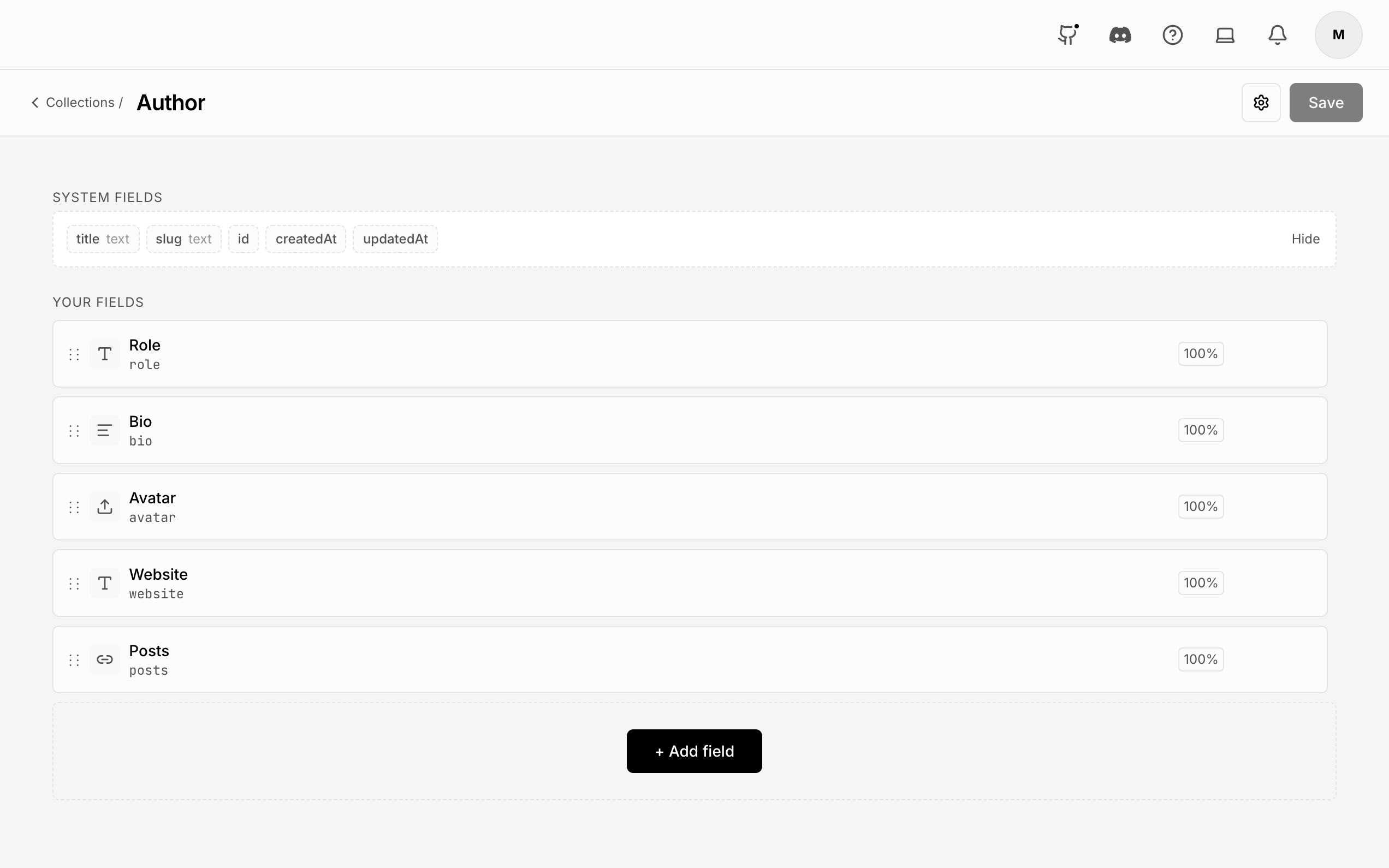
Model content in TypeScript or in the Visual Schema Builder. Both feed the same Nextly runtime, admin and APIs.
Visual Schema Builder
nextlyModel content visually on your development instance with the Visual Schema Builder.
Where it stopsOn the docs pageVisual Schema Builder- Generated types: nextly.config.ts
Generated types
nextlyTyped, code-defined schemas and APIs:
nextly generate:typeswrites types for the collections, singles and field groups in your config.Where it stopsOn the docs pageGenerated types - no screen
Field groups
nextlyDefine a field group once and reuse it in any collection or single; each use stores its own data.
Where it stopsOn the docs pageField groups 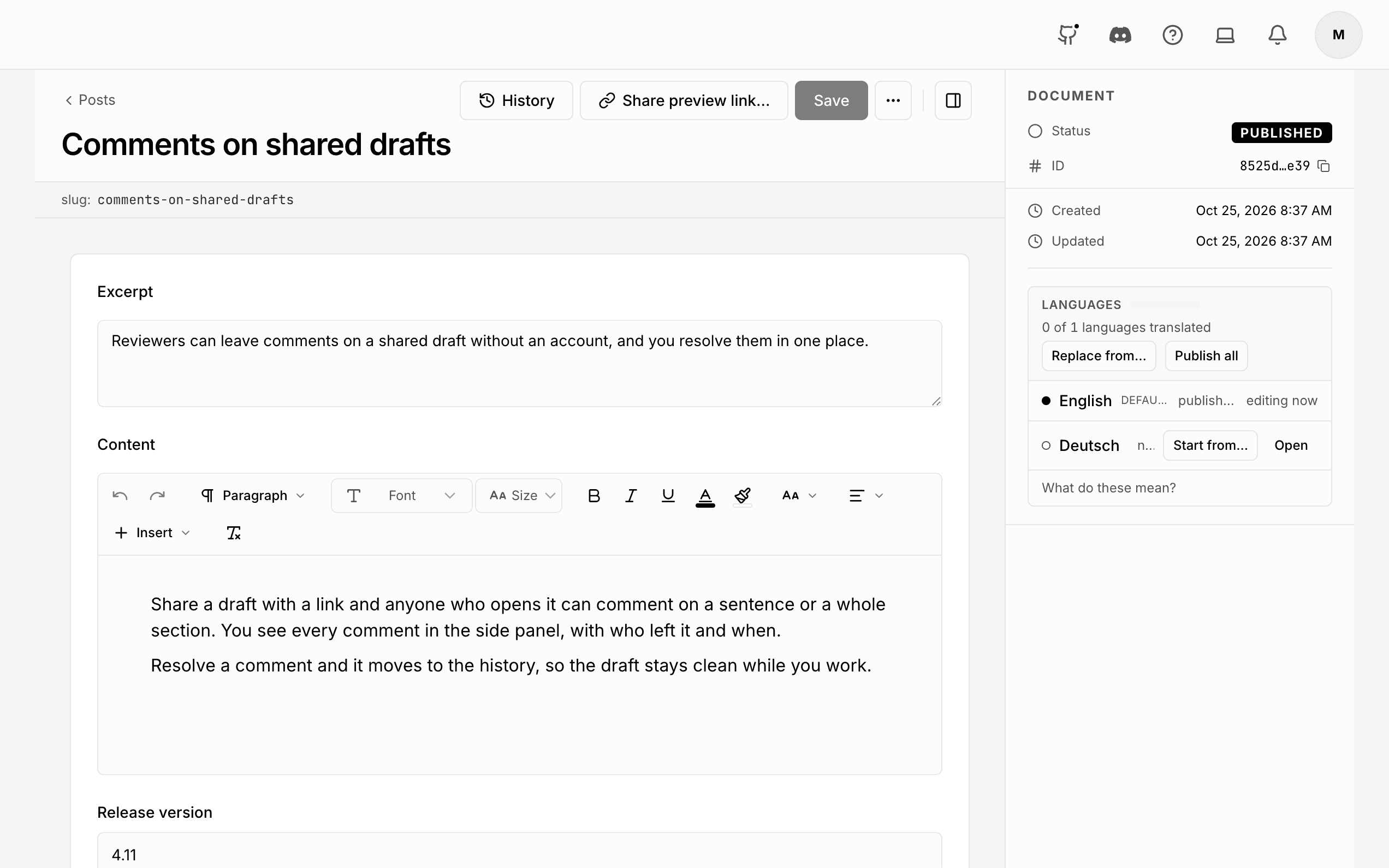
Rich text
nextlyA Lexical rich text editor with tables, code blocks with syntax highlighting, images from the media library and YouTube or Vimeo embeds.
Slash commands and drag handles to move blocks in the rich text editor.
Where it stopsOn the docs pageRich text- no screen
Media library
nextly · storage adaptersA media library, stored on local disk by default, or on S3 (and R2 or MinIO), Vercel Blob or UploadThing.
Organise media in folders; with
sharpinstalled, uploaded images get a thumbnail and the image sizes you configure.Where it stopsOn the docs pageMedia library - no screen
Databases
nextly · database adaptersPostgreSQL 15 or later, MySQL 8 or later, SQLite 3.38 or later for local work.
Where it stopsOn the docs pageDatabases
Build pages
Twenty blocks out of the box, and the page renderer takes your own React blocks.
Visual Page Builder
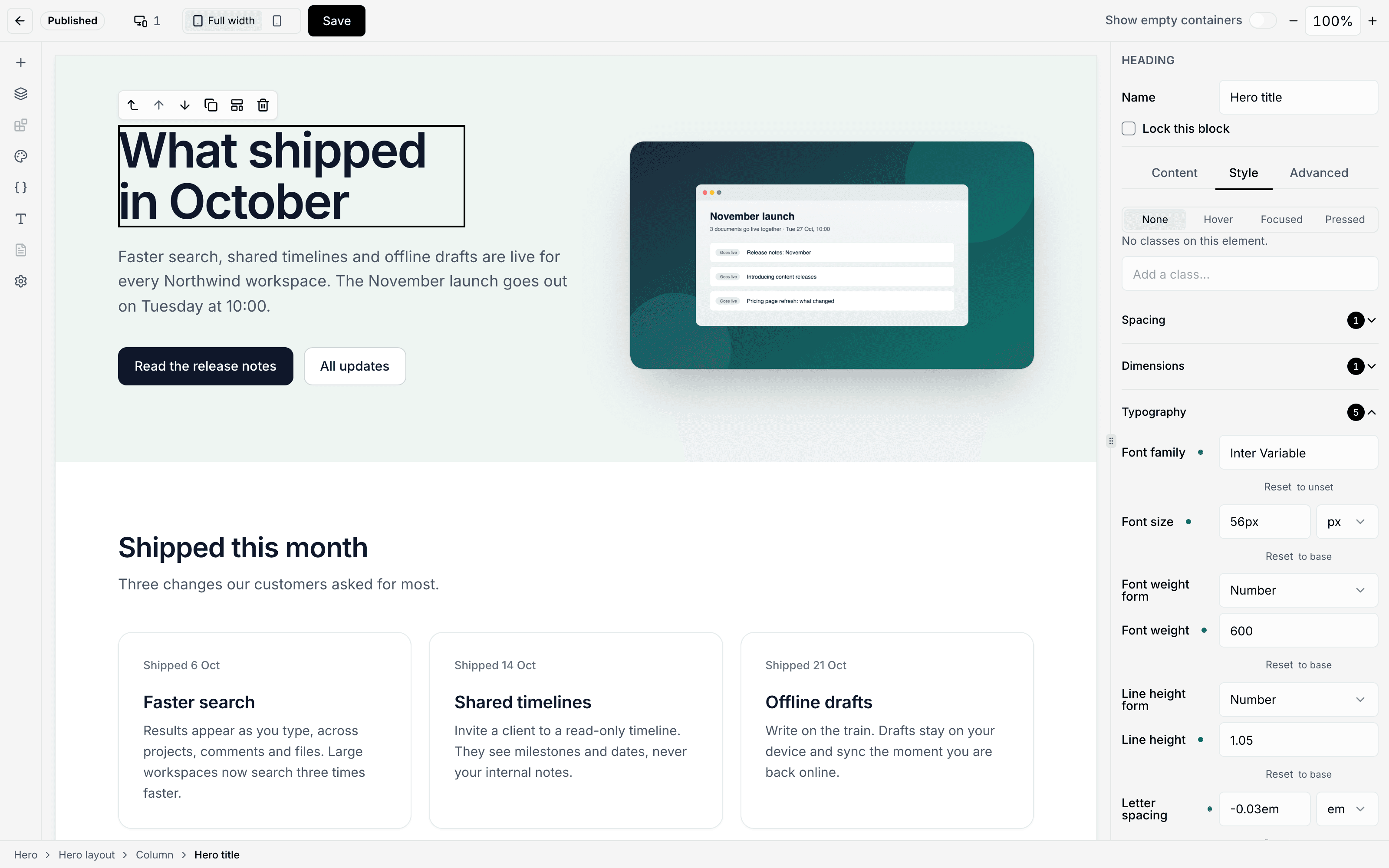
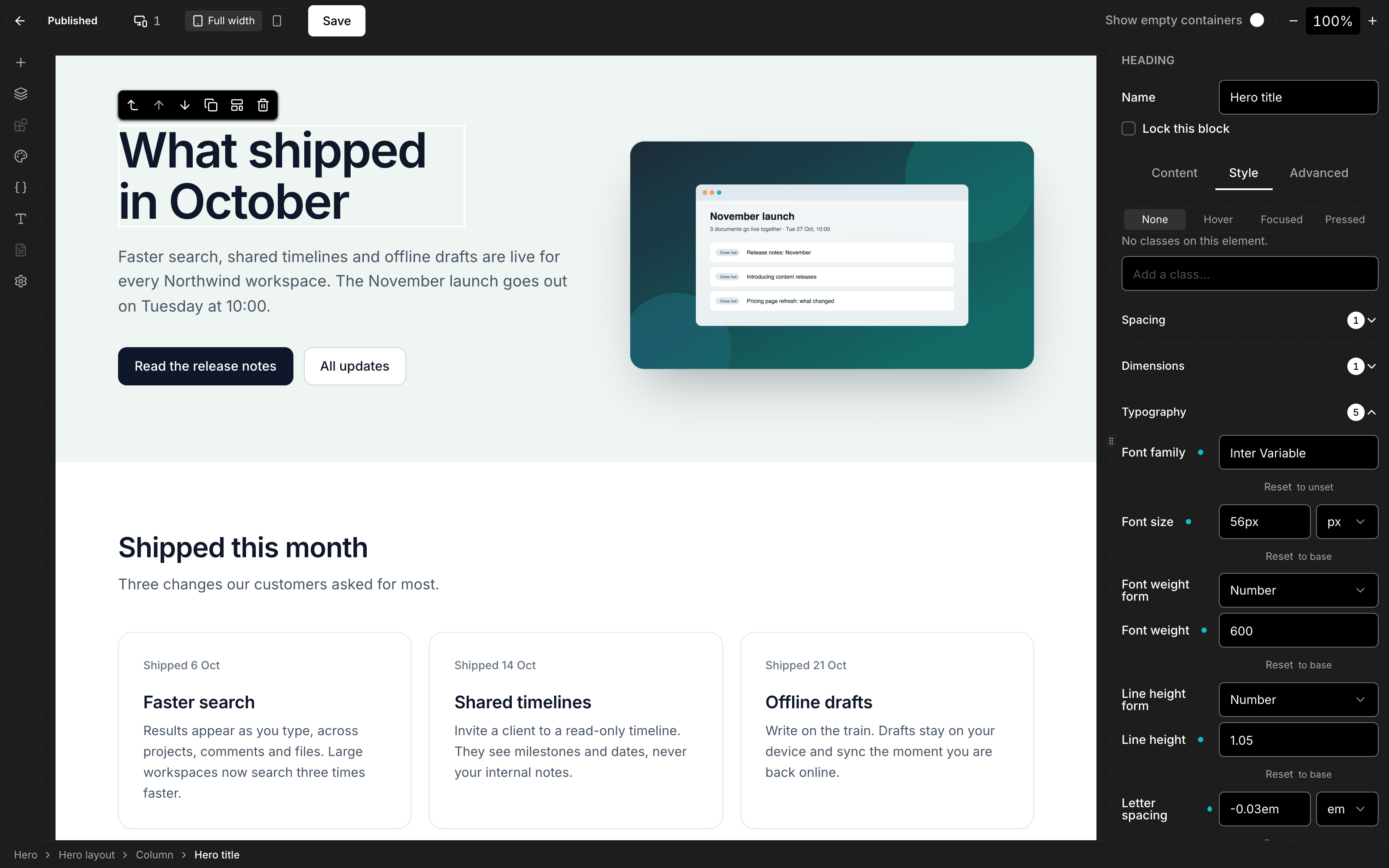
@nextlyhq/plugin-page-builderAdd the official Visual Page Builder when your project needs it.
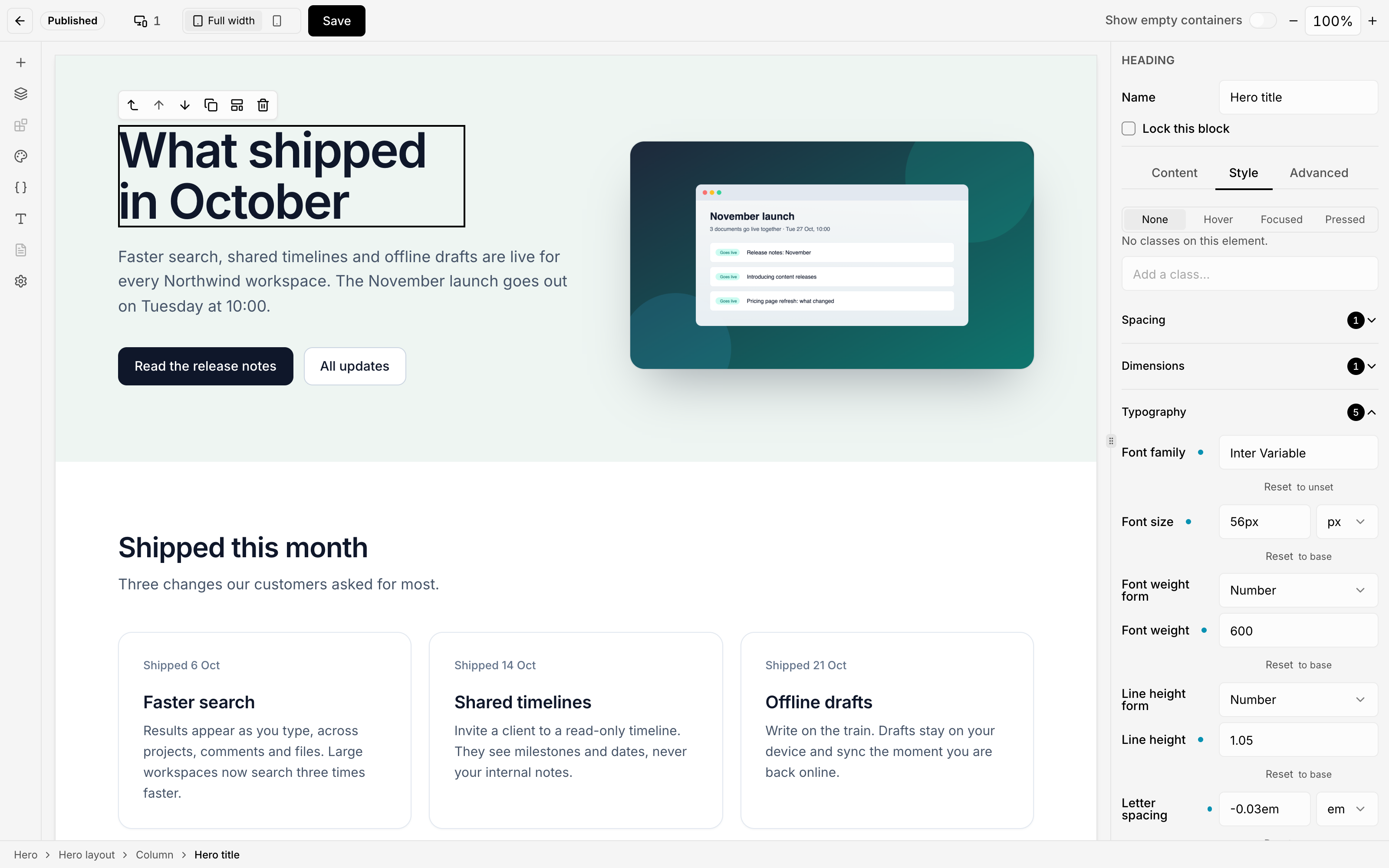
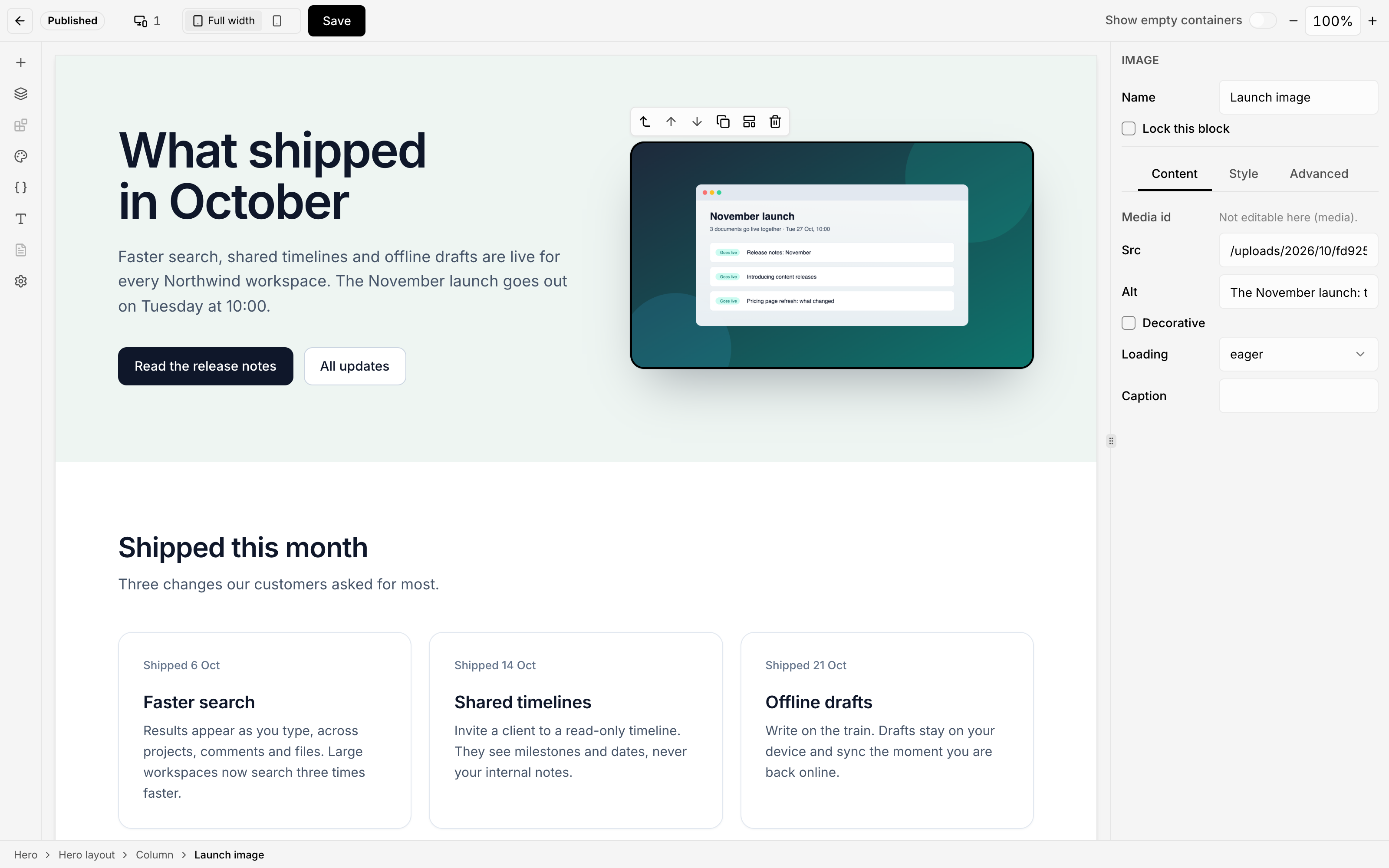
The Visual Page Builder ships with 20 core blocks, from sections and columns to forms, galleries and embeds.
Where it stopsVisual Page BuilderImport the Visual Page Builder's stylesheet once in your admin page.
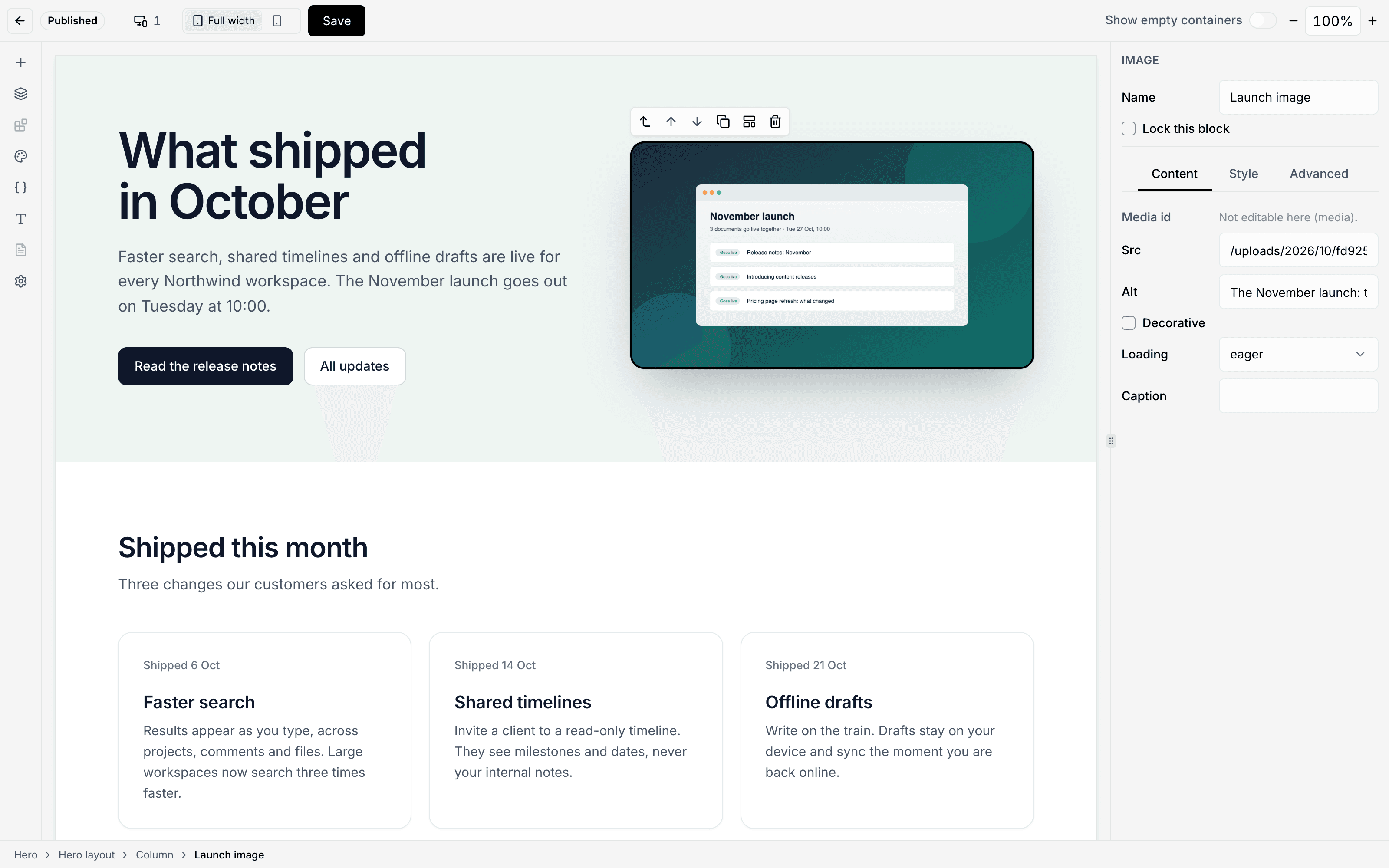
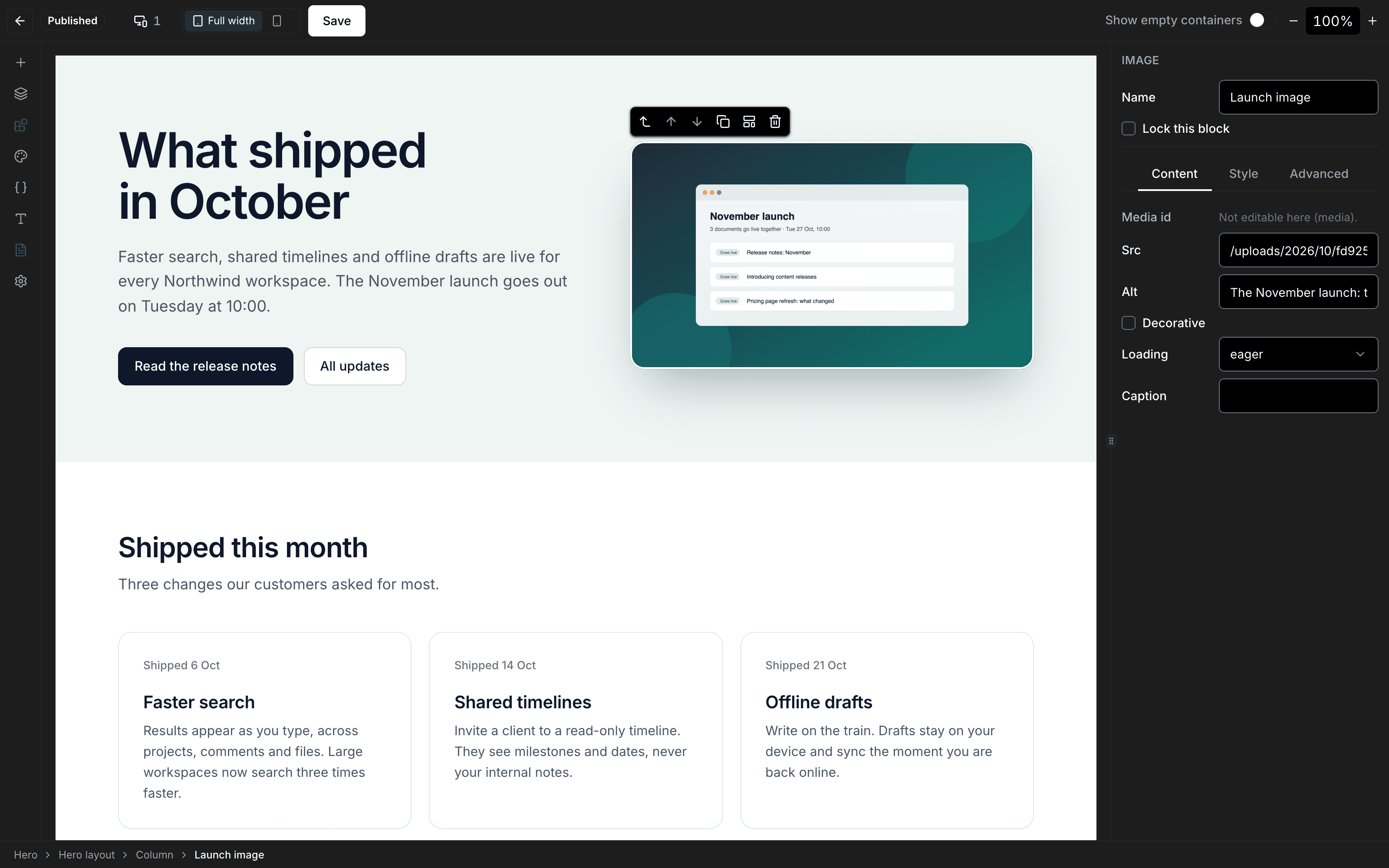
Full-screen canvas
@nextlyhq/plugin-page-builderThe Visual Page Builder opens full-screen, in place of the admin's sidebars and header.
Where it stopsOn the docs pageFull-screen canvas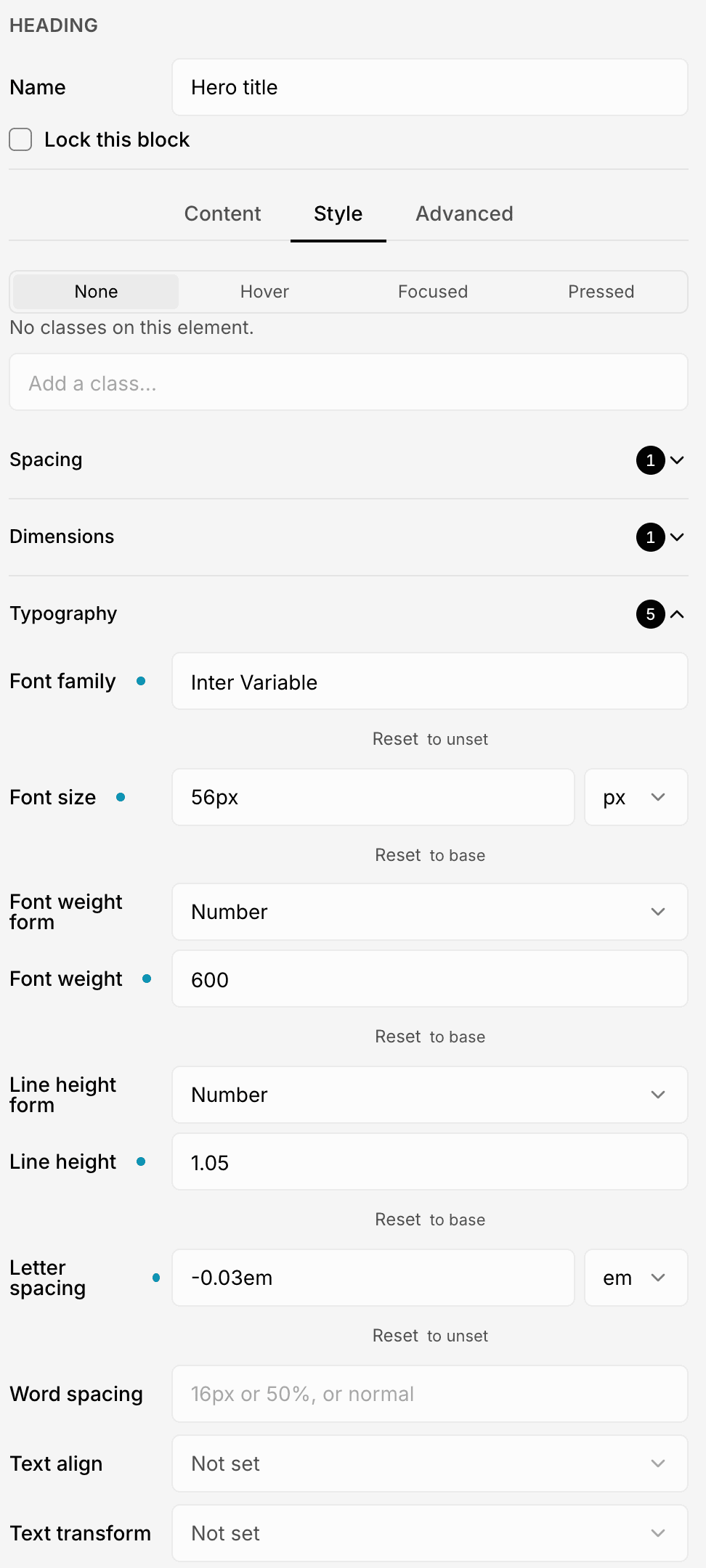
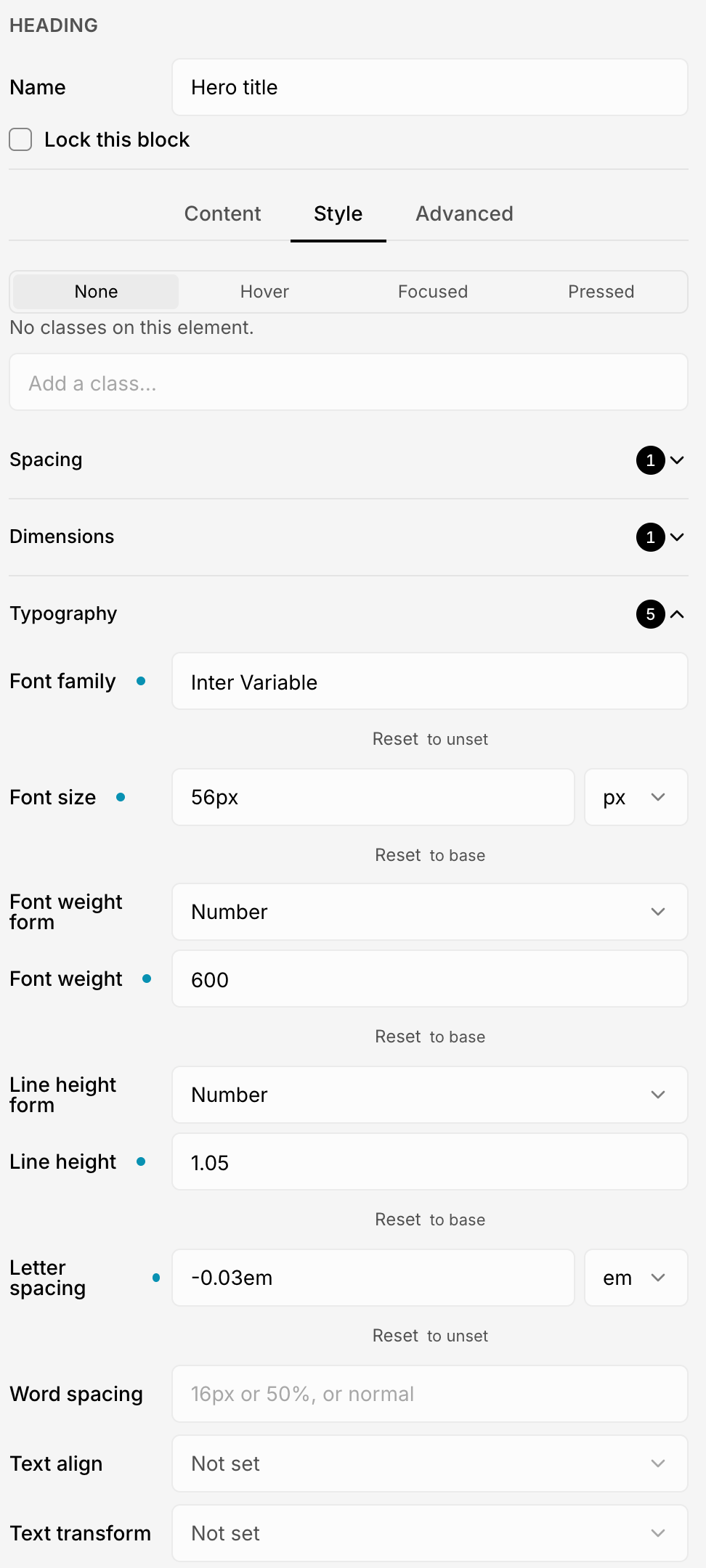
Breakpoints
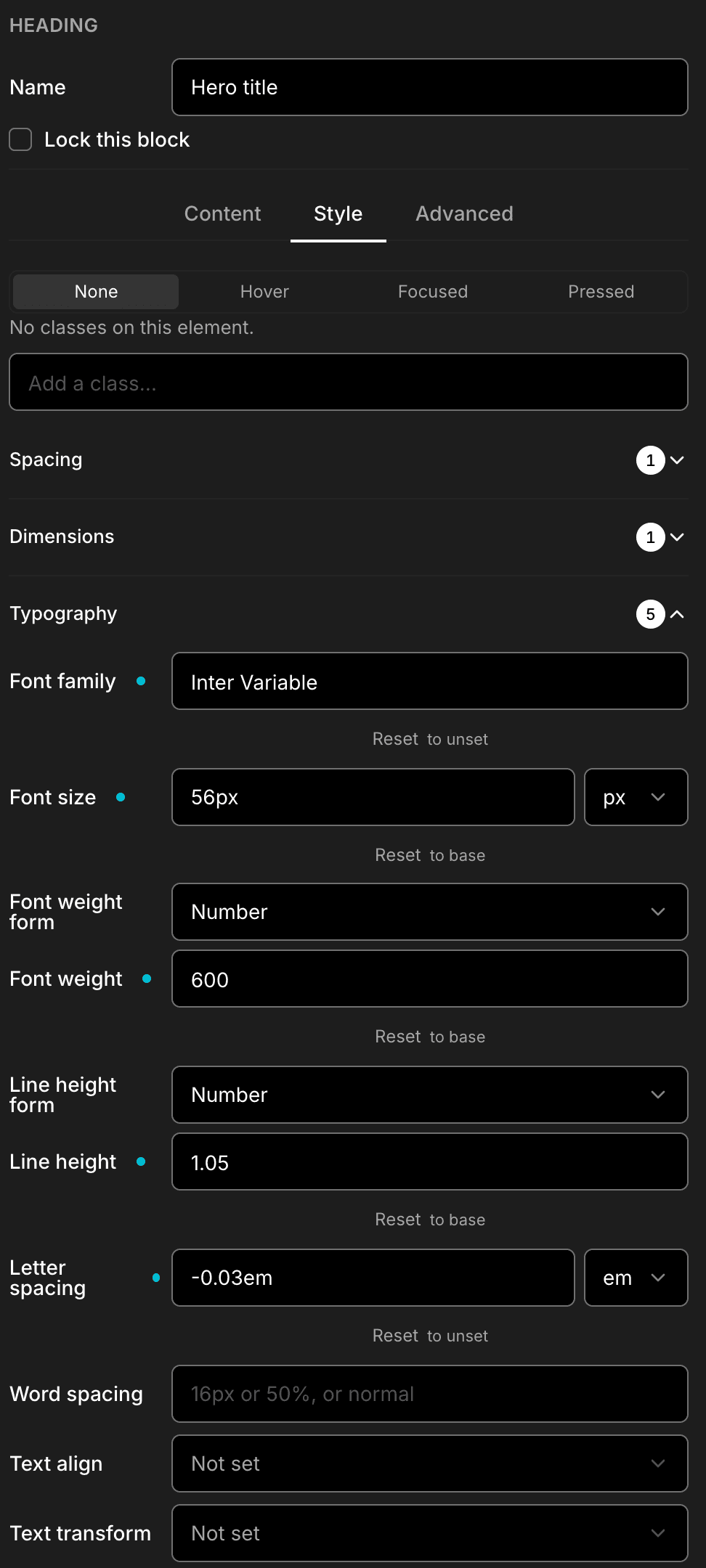
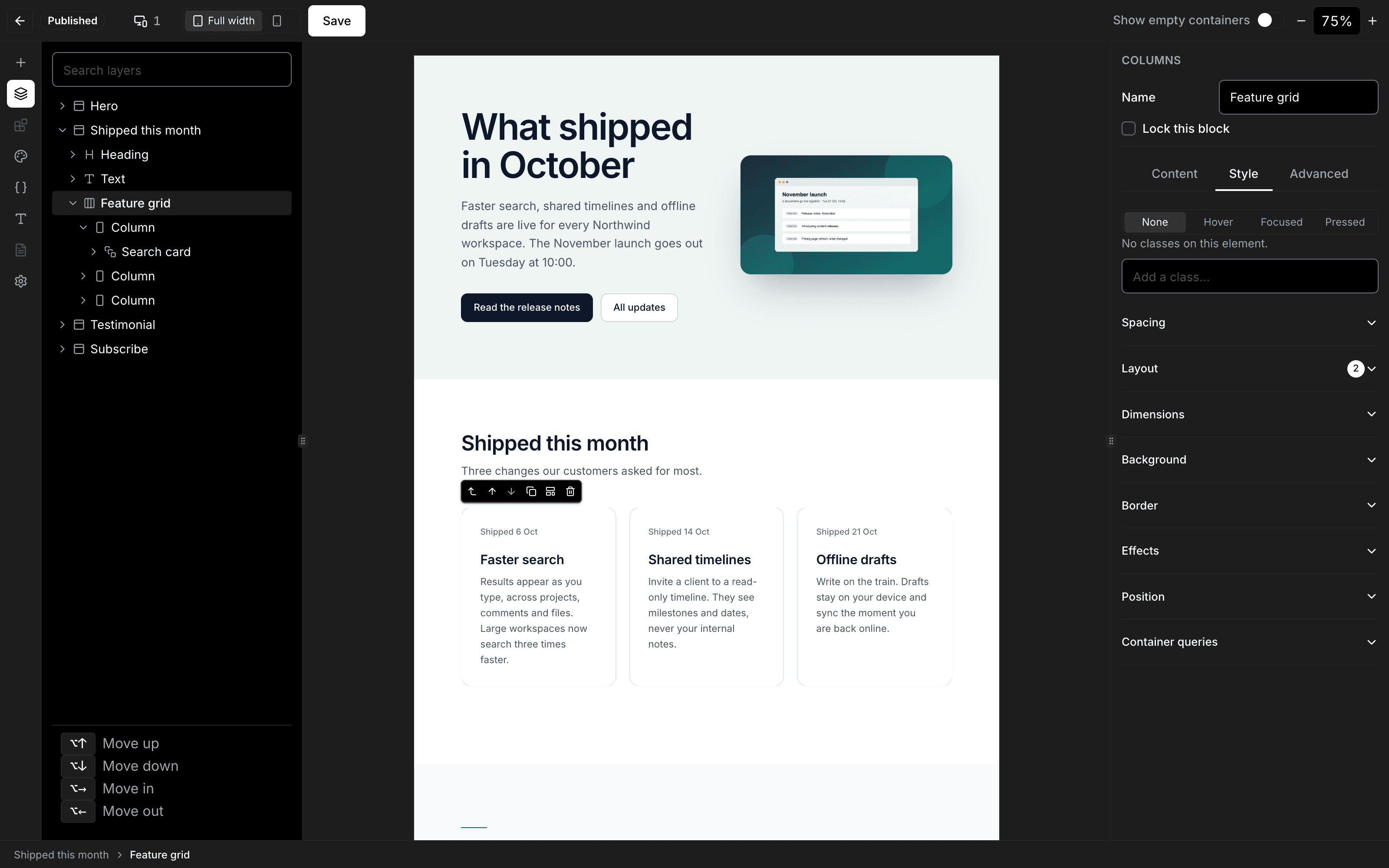
@nextlyhq/plugin-page-builderStyle a block separately for each breakpoint: the Style tab edits the breakpoint the canvas is sized to, and the canvas resizes to each breakpoint's width.
A block's
supportsdecides which style controls the Visual Page Builder offers for it.Where it stopsBreakpointsA published page shows the breakpoint styles only when its route passes
siteStyles.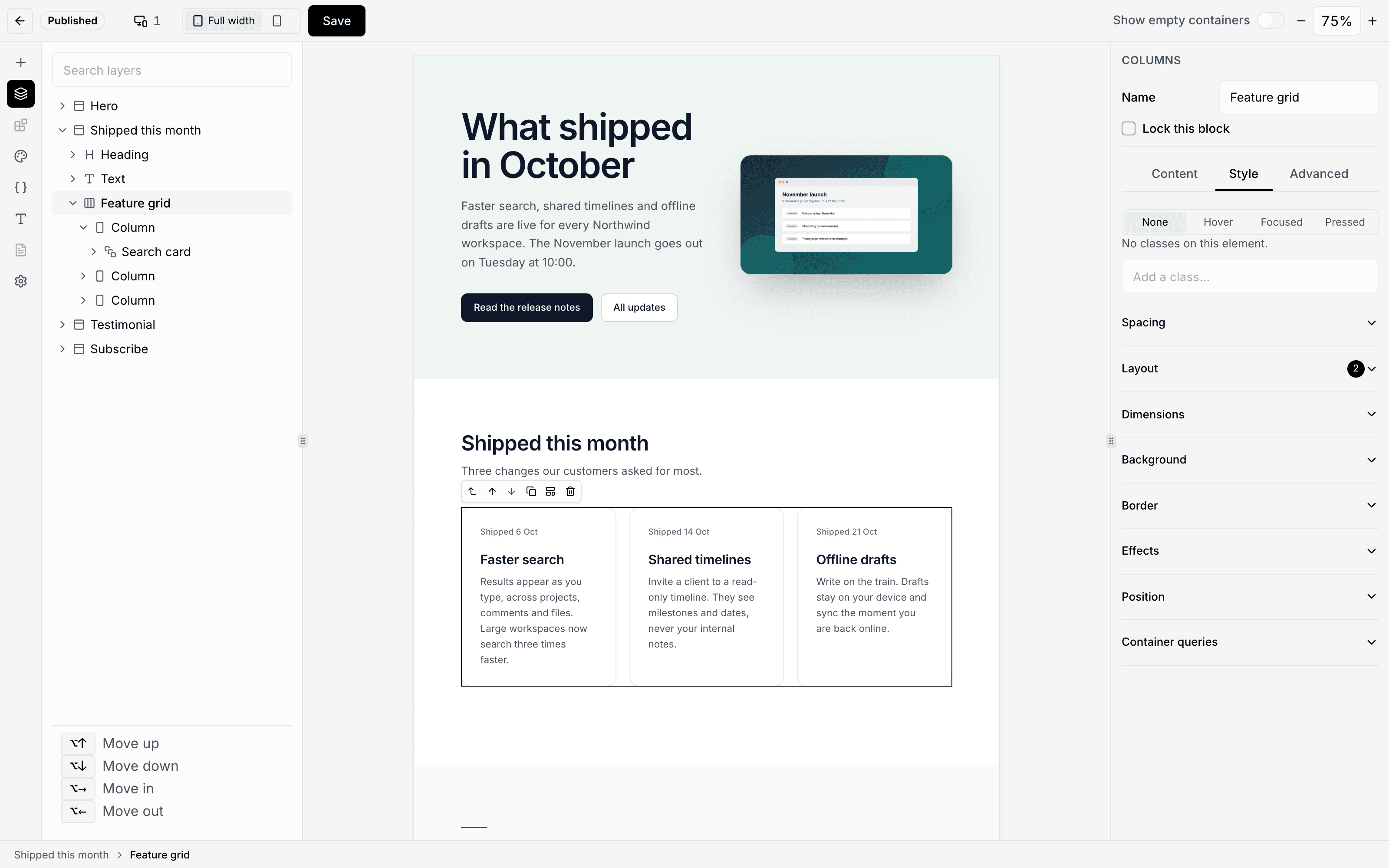
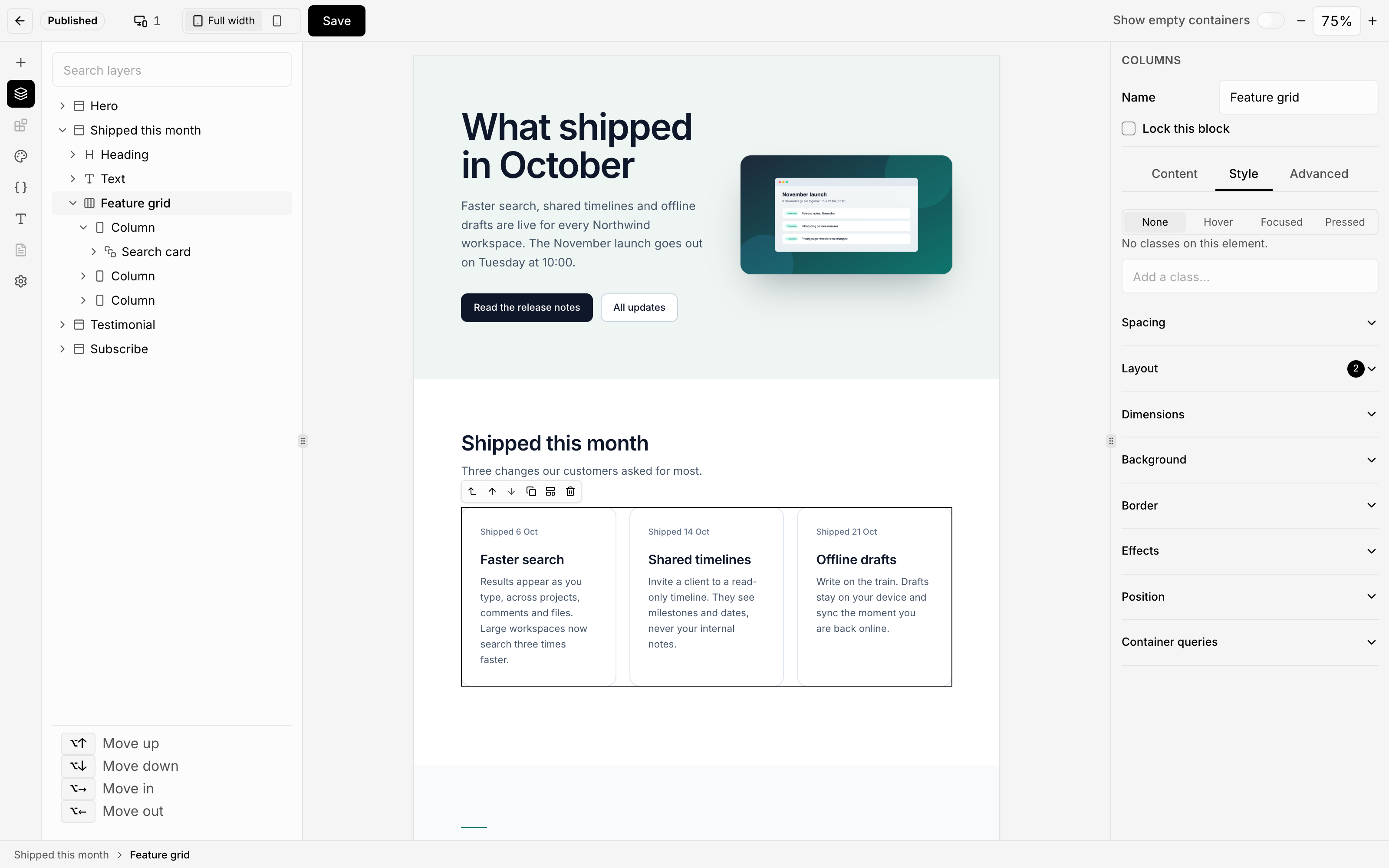
Layers and the keyboard
@nextlyhq/plugin-page-builderMove a selected block with Alt+Arrow keys: up and down among its siblings, left and right in and out of containers.
Where it stopsOn the docs pageLayers and the keyboard- no screen
One renderer
@nextlyhq/plugin-page-builderThe Visual Page Builder's canvas draws your page with the same React renderer that serves it.
Where it stopsOn the docs pageOne renderer - no screen
Server rendering
@nextlyhq/plugin-page-builderPages render on the server, and the core blocks add no JavaScript of their own.
Where it stopsServer renderingThe Next.js runtime still loads, and the embed block runs in a sandboxed iframe that may run scripts.
Forms
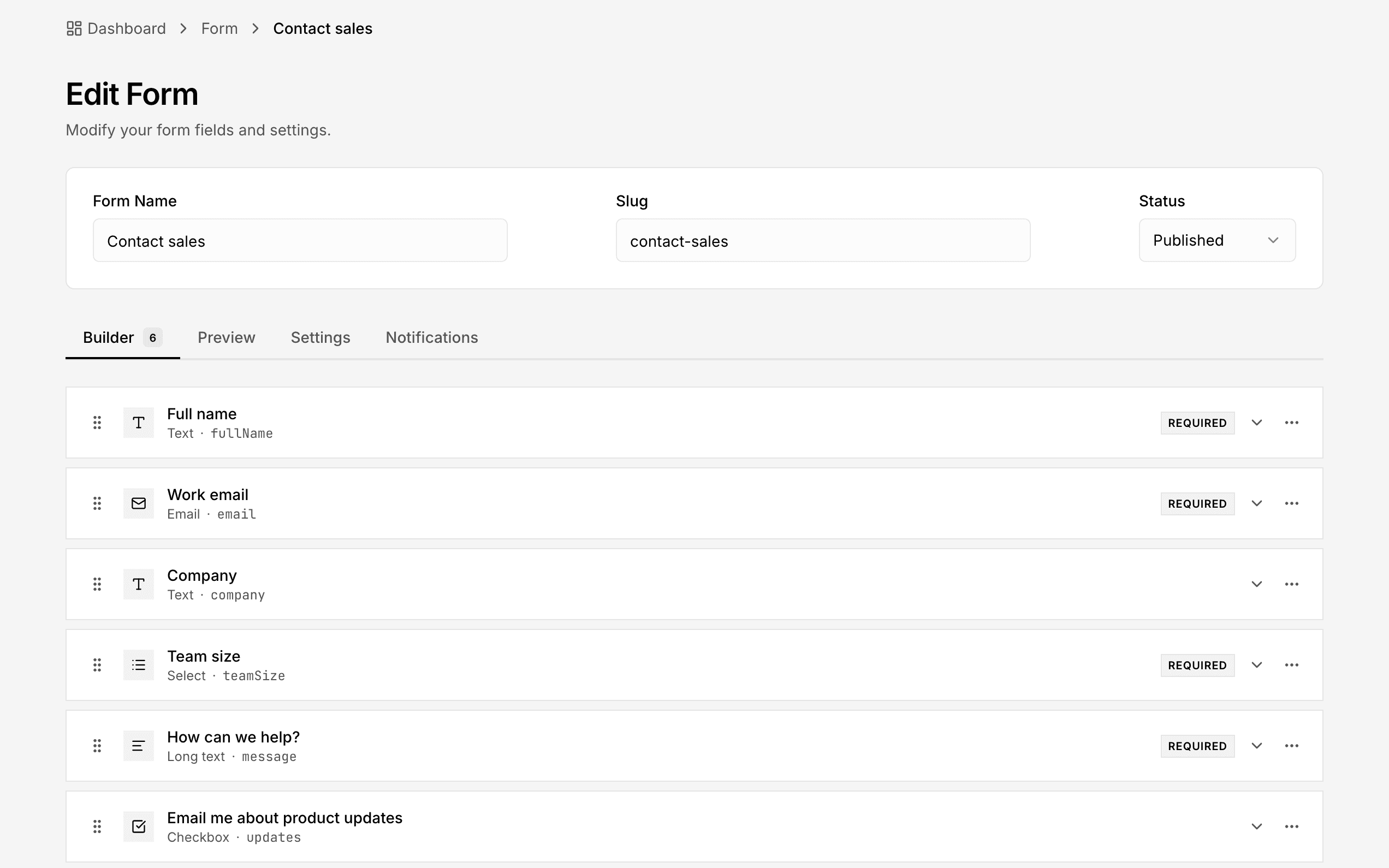
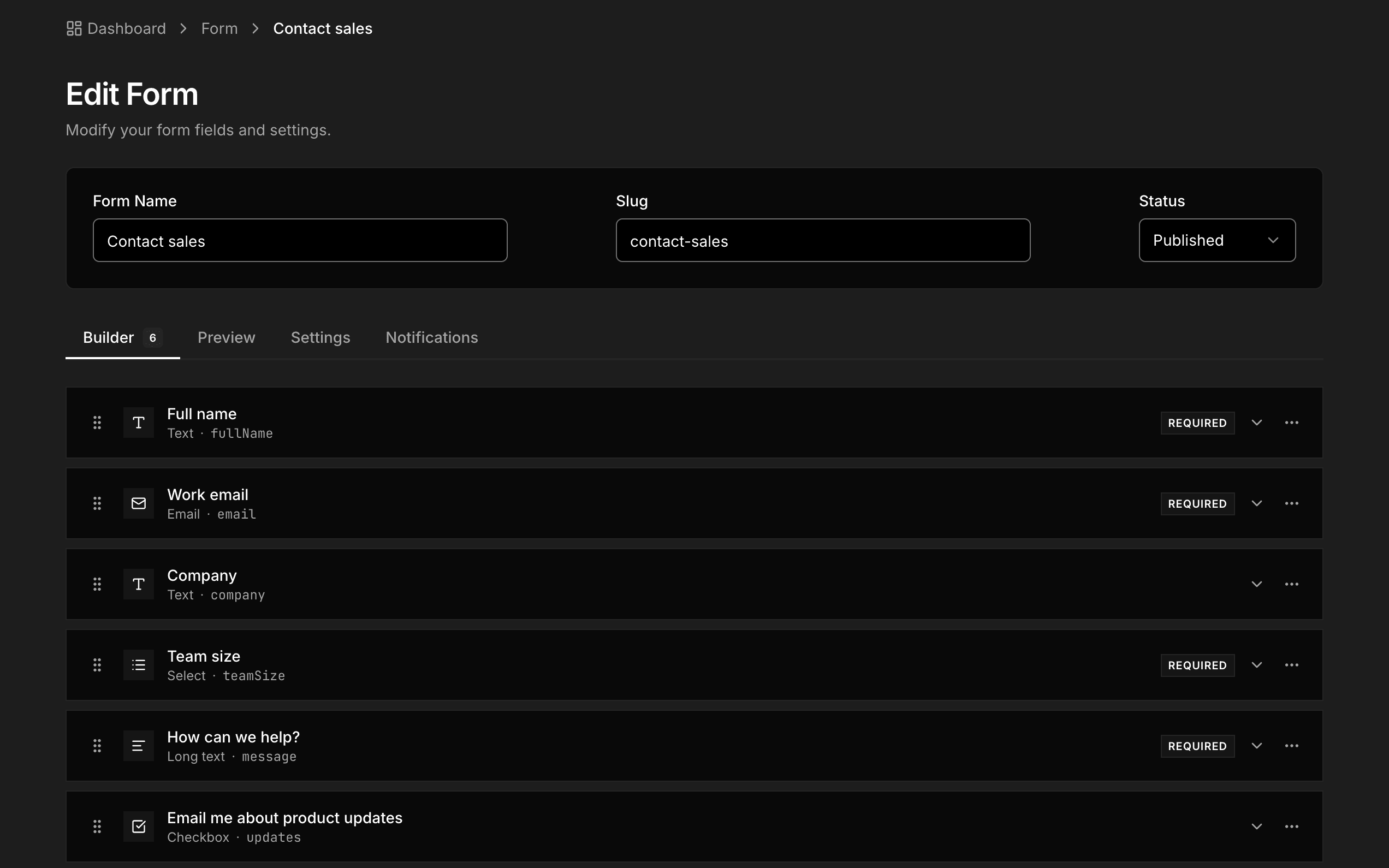
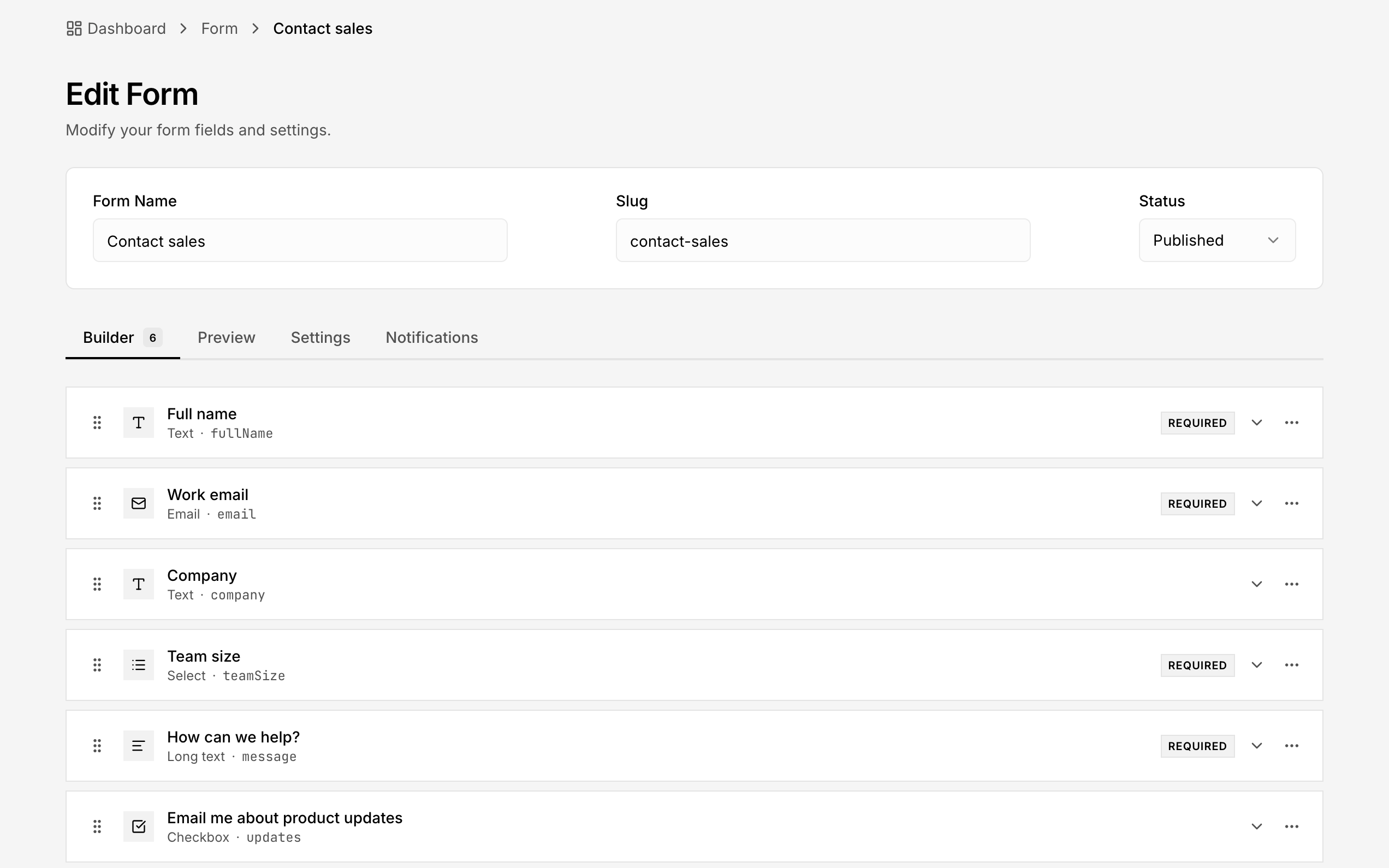
@nextlyhq/plugin-form-builderBuild forms and capture submissions with the official Form Builder plugin.
Where it stopsOn the docs pageForms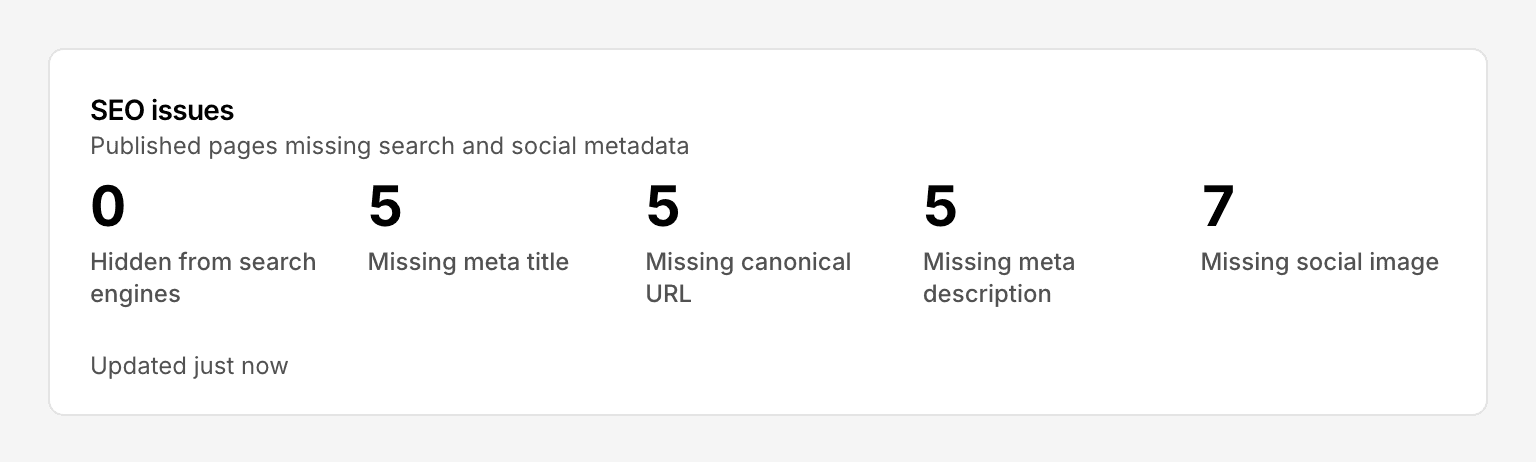
SEO
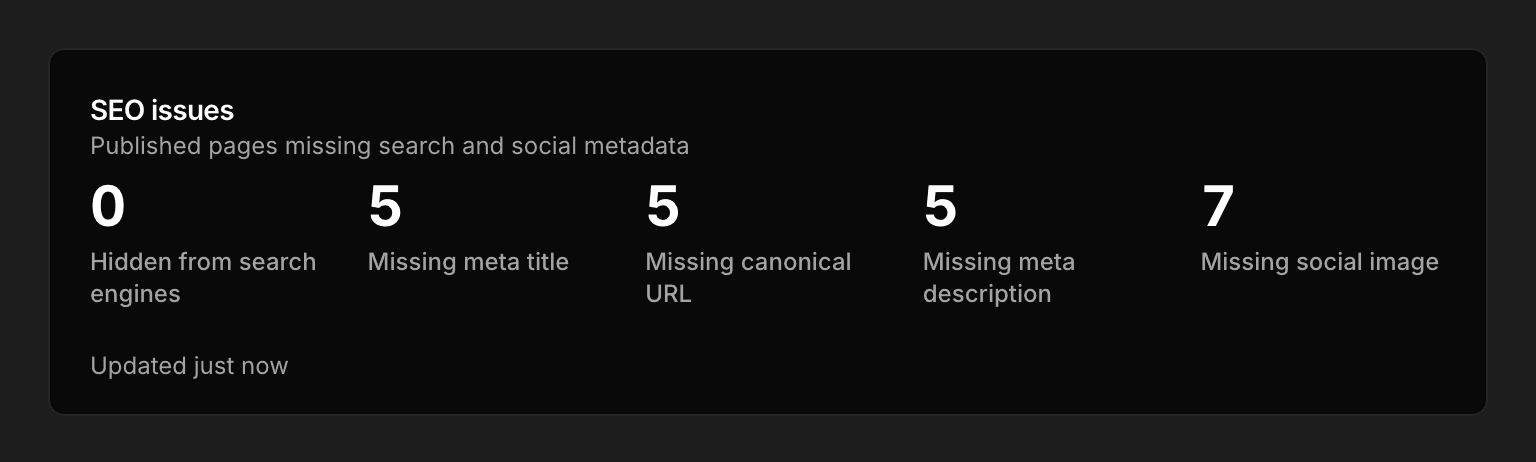
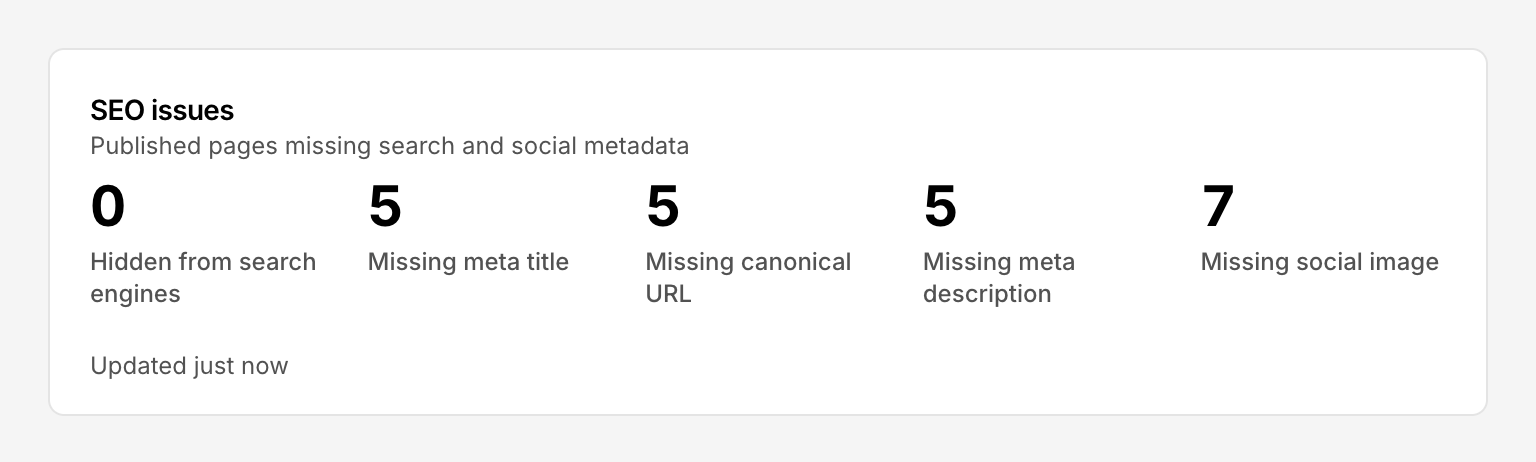
@nextlyhq/plugin-seoThe SEO plugin adds an SEO issues widget.
Where it stopsOn the docs pageSEO
Localization
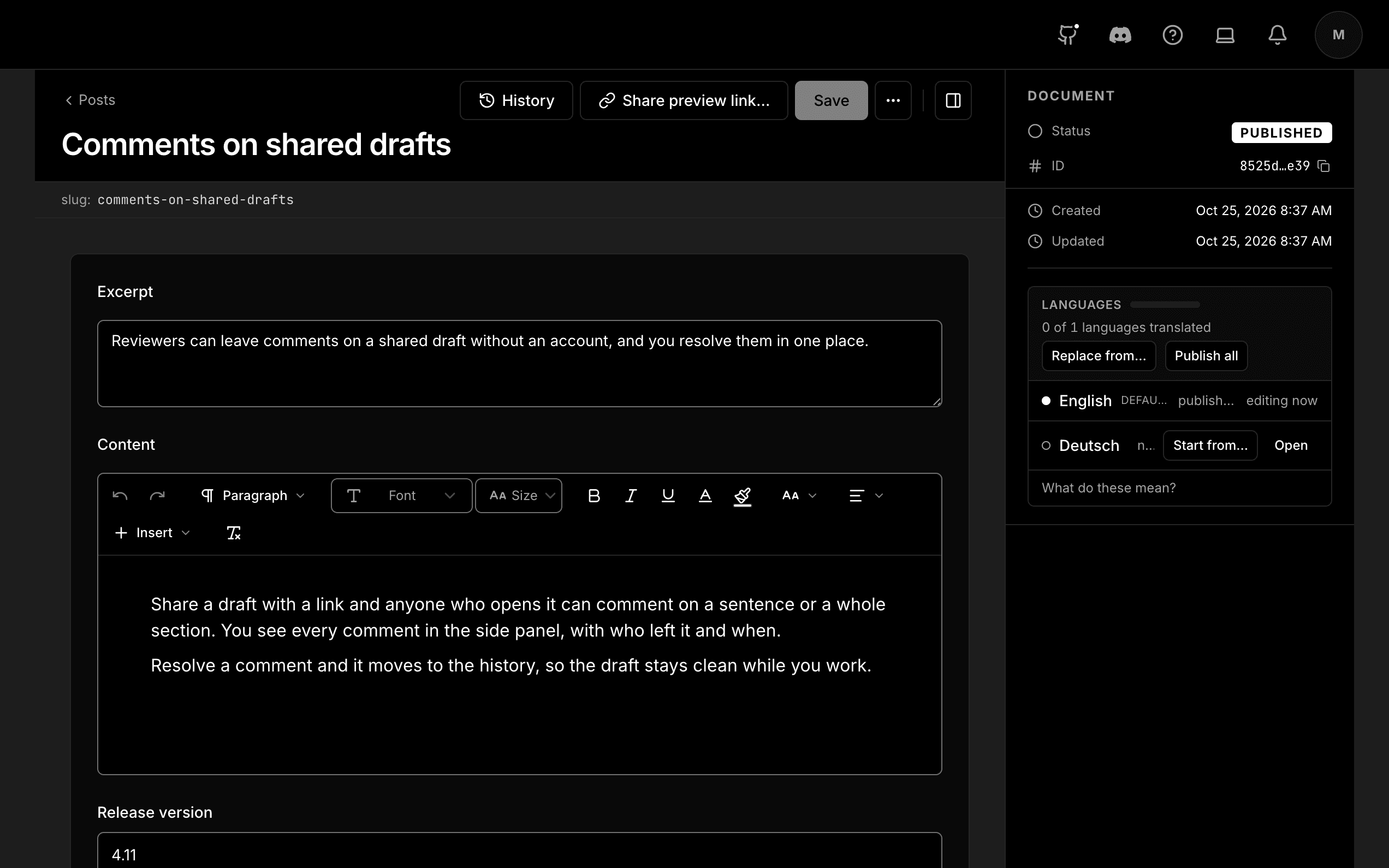
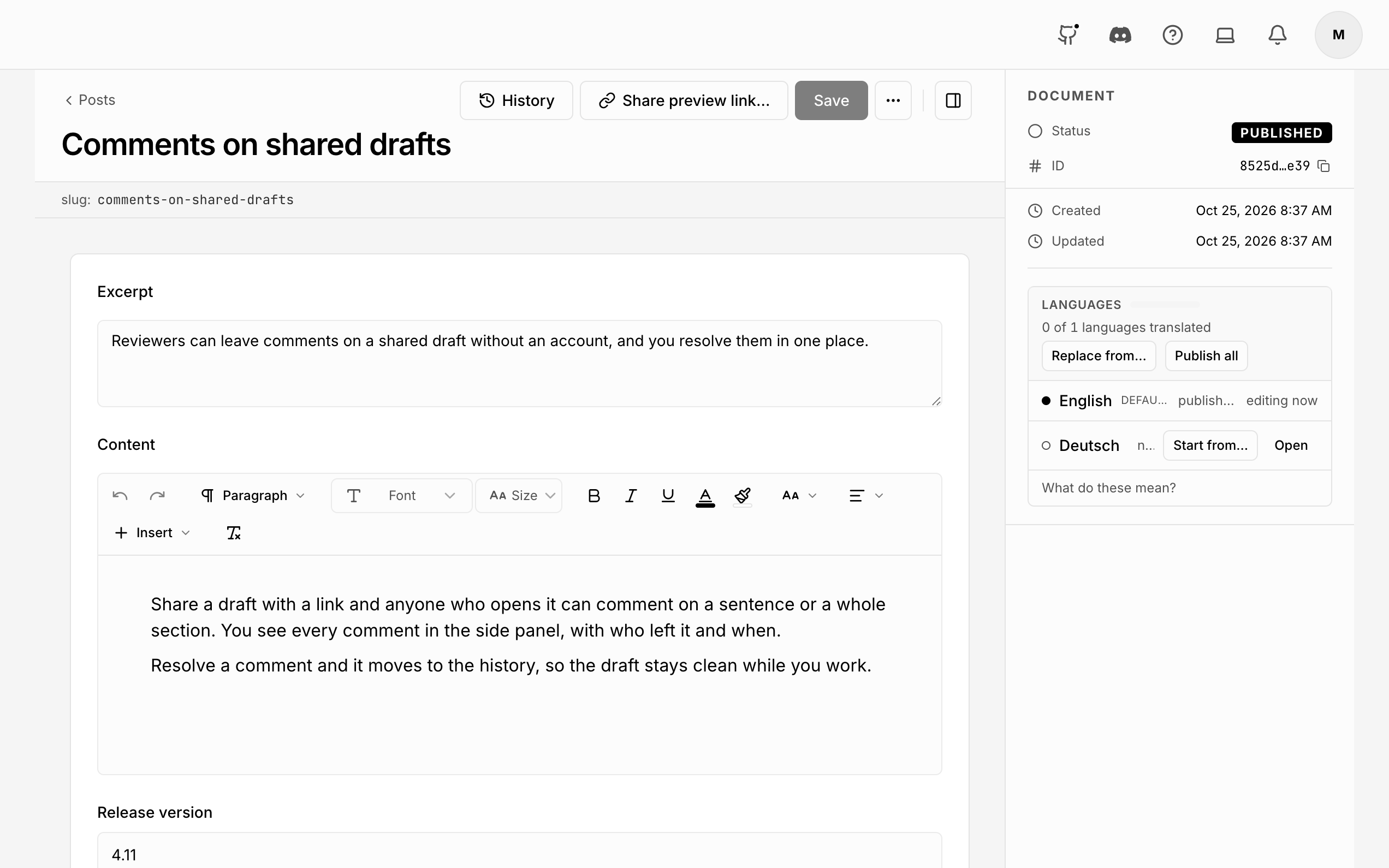
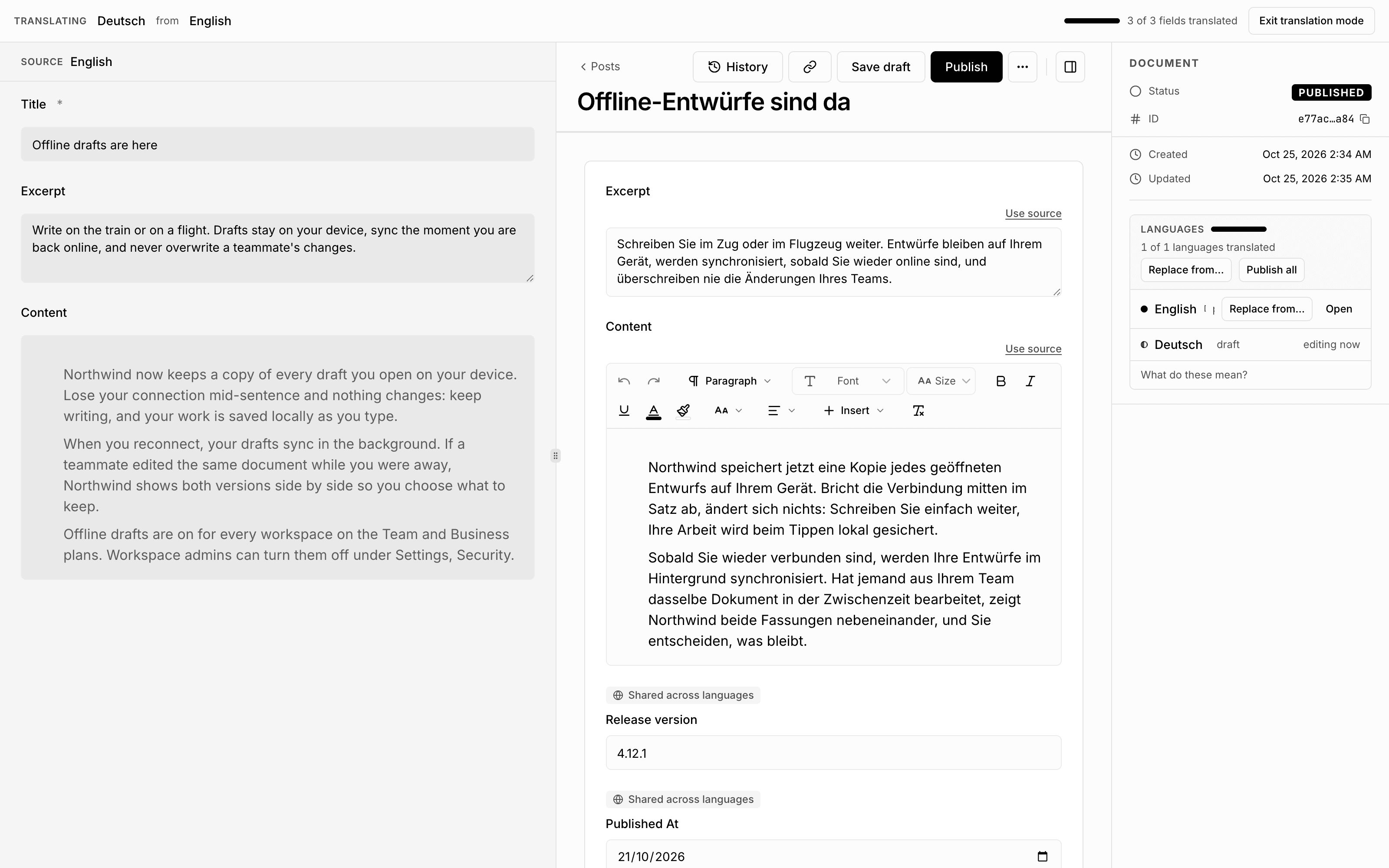
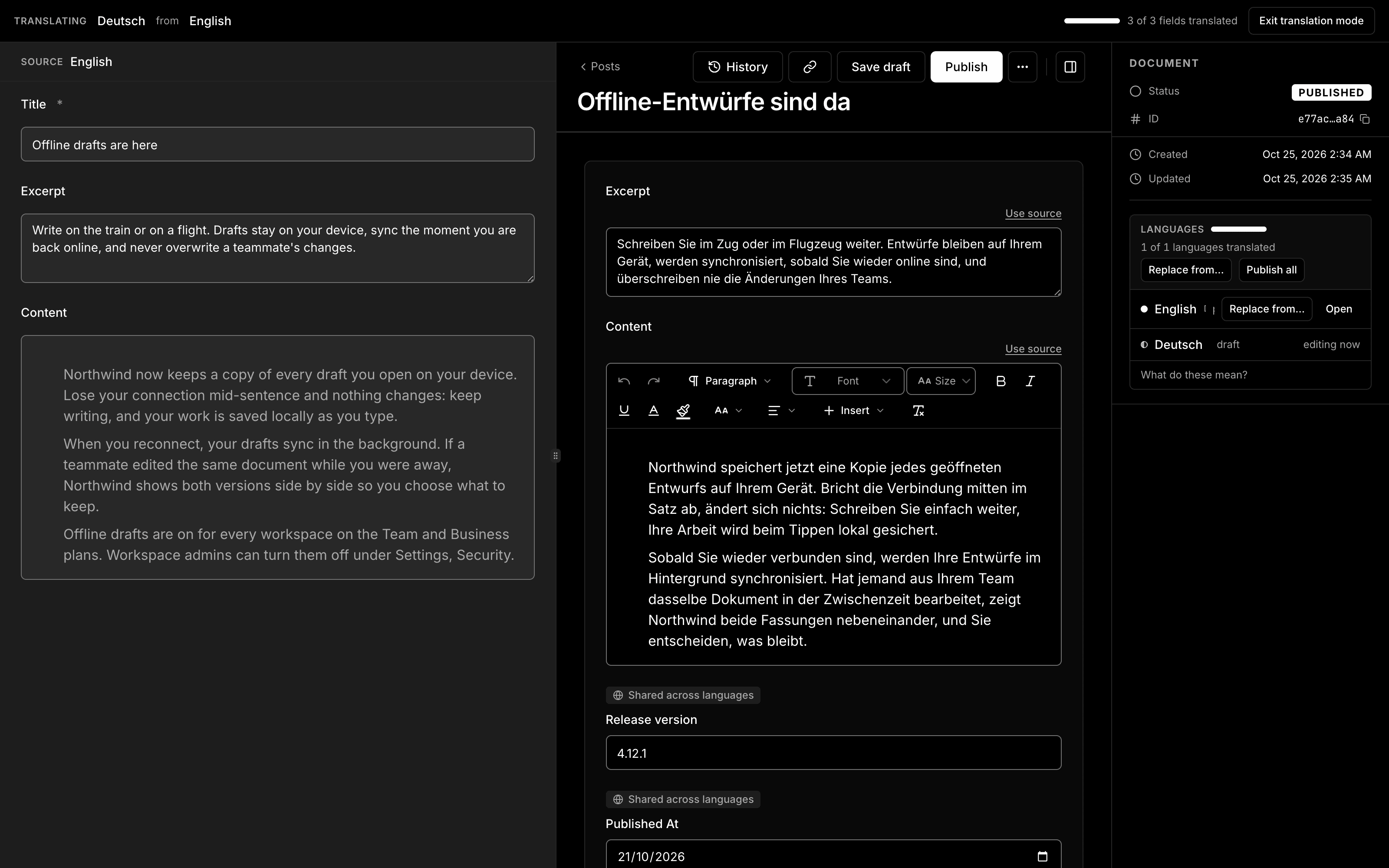
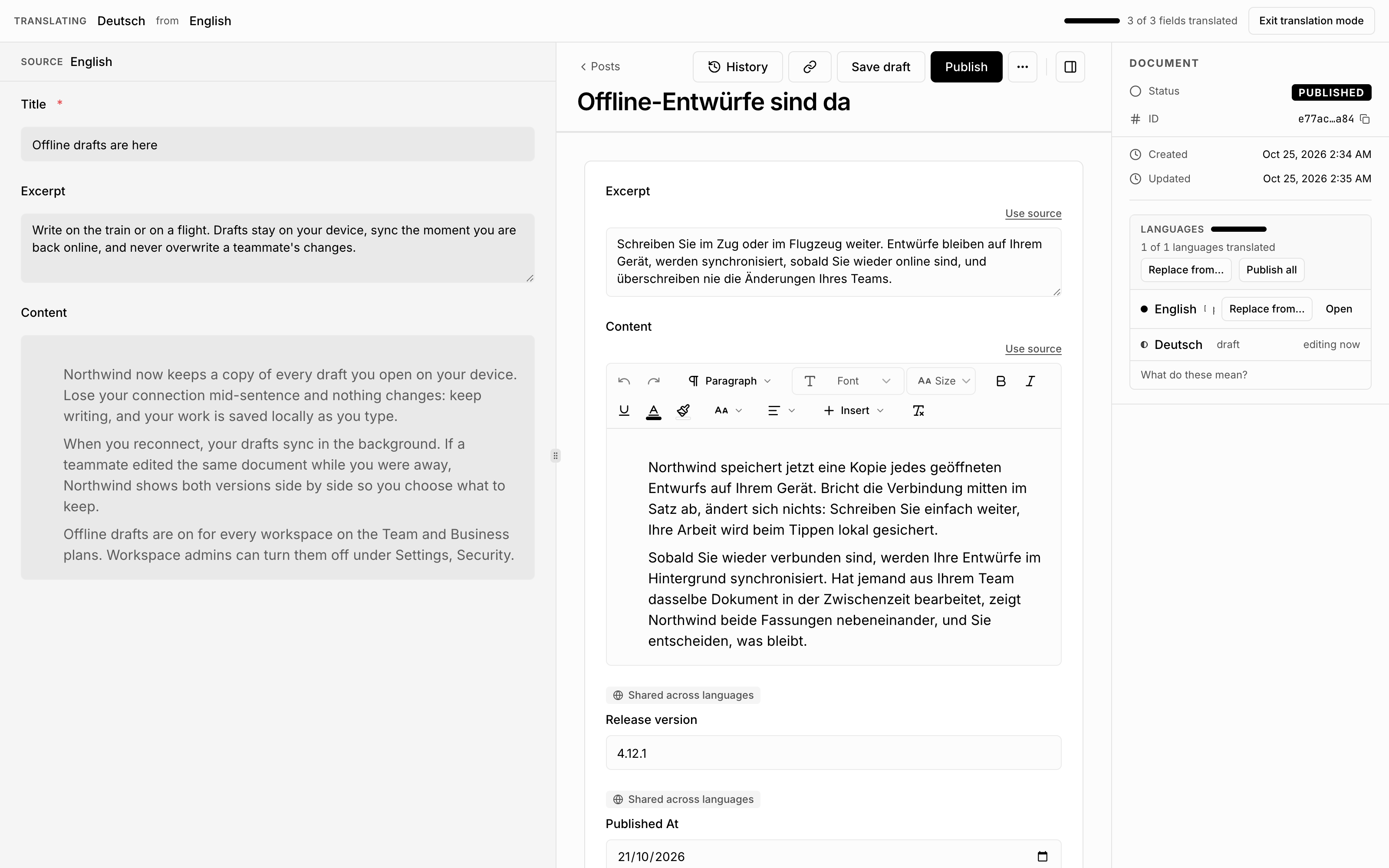
nextlyTranslate collections, singles and components, with a fallback language when a translation is missing. With drafts on, publish each language's translated fields on its own.
Localization is built into Nextly's core; no plugin.
Where it stopsLocalizationA field that isn't translated holds one value for every language; password fields are never translated.
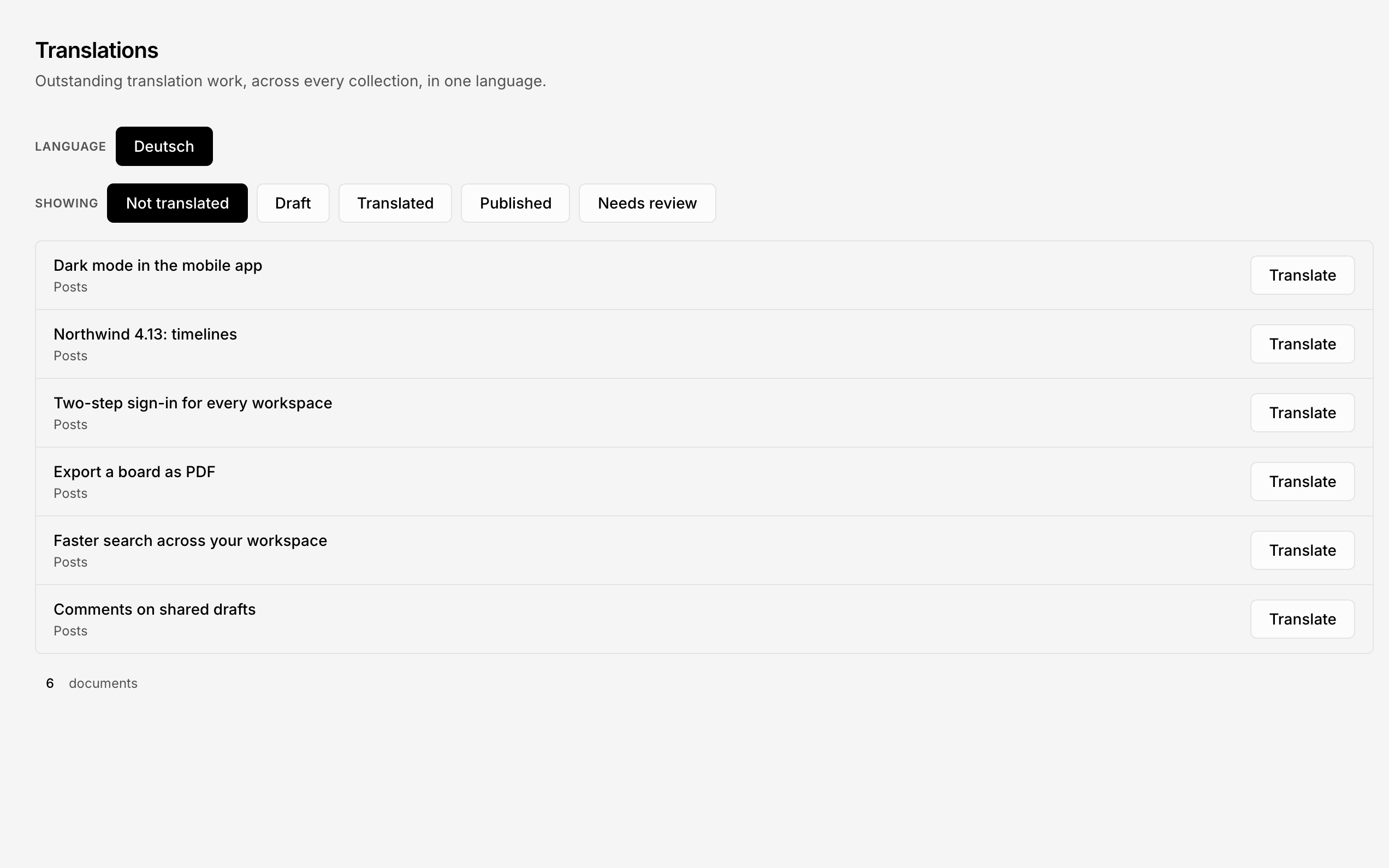
Translations page
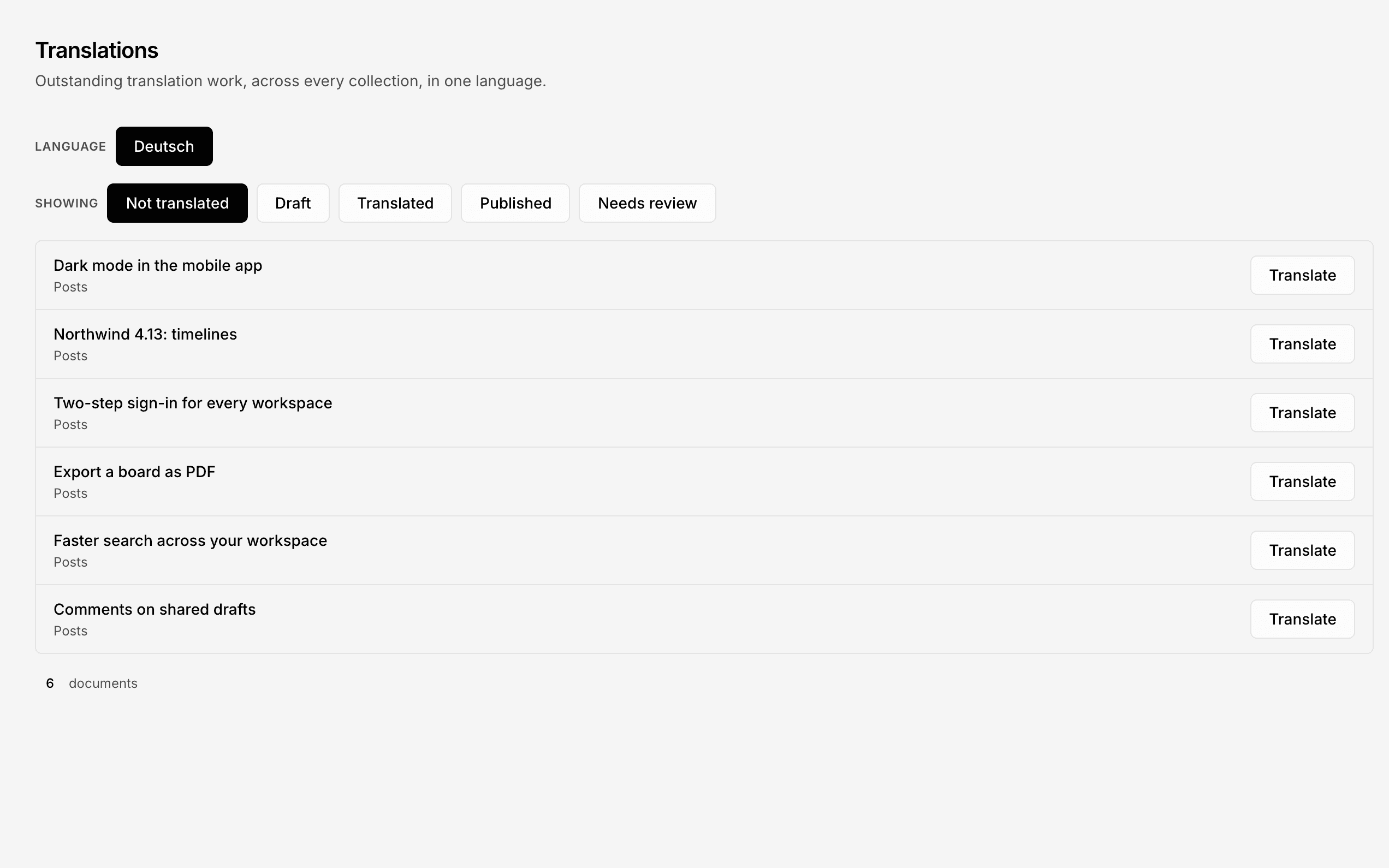
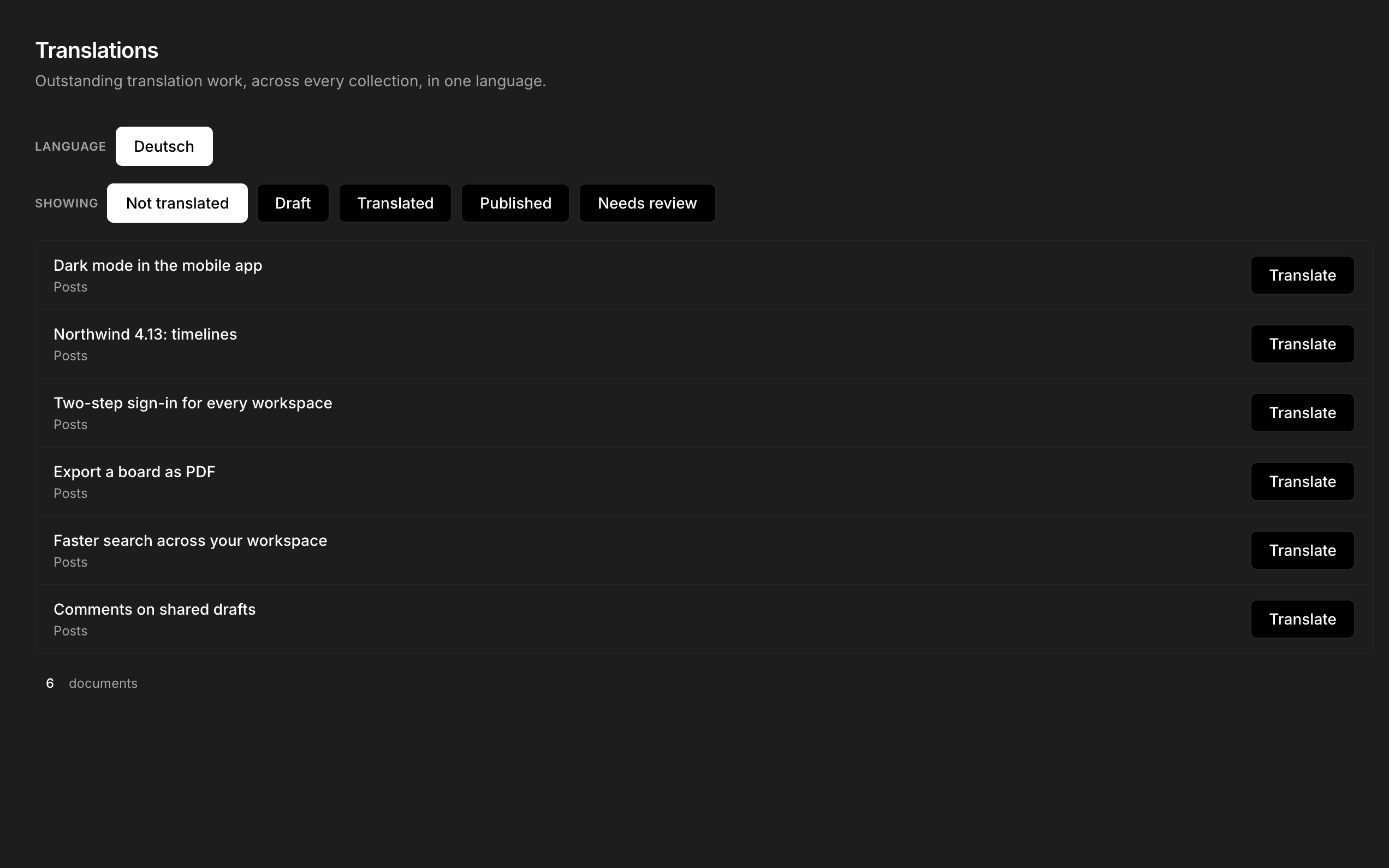
nextlyA Translations page lists one language's untranslated, draft, translated, published or out-of-date documents, across up to 20 collections.
Where it stopsOn the docs pageTranslations page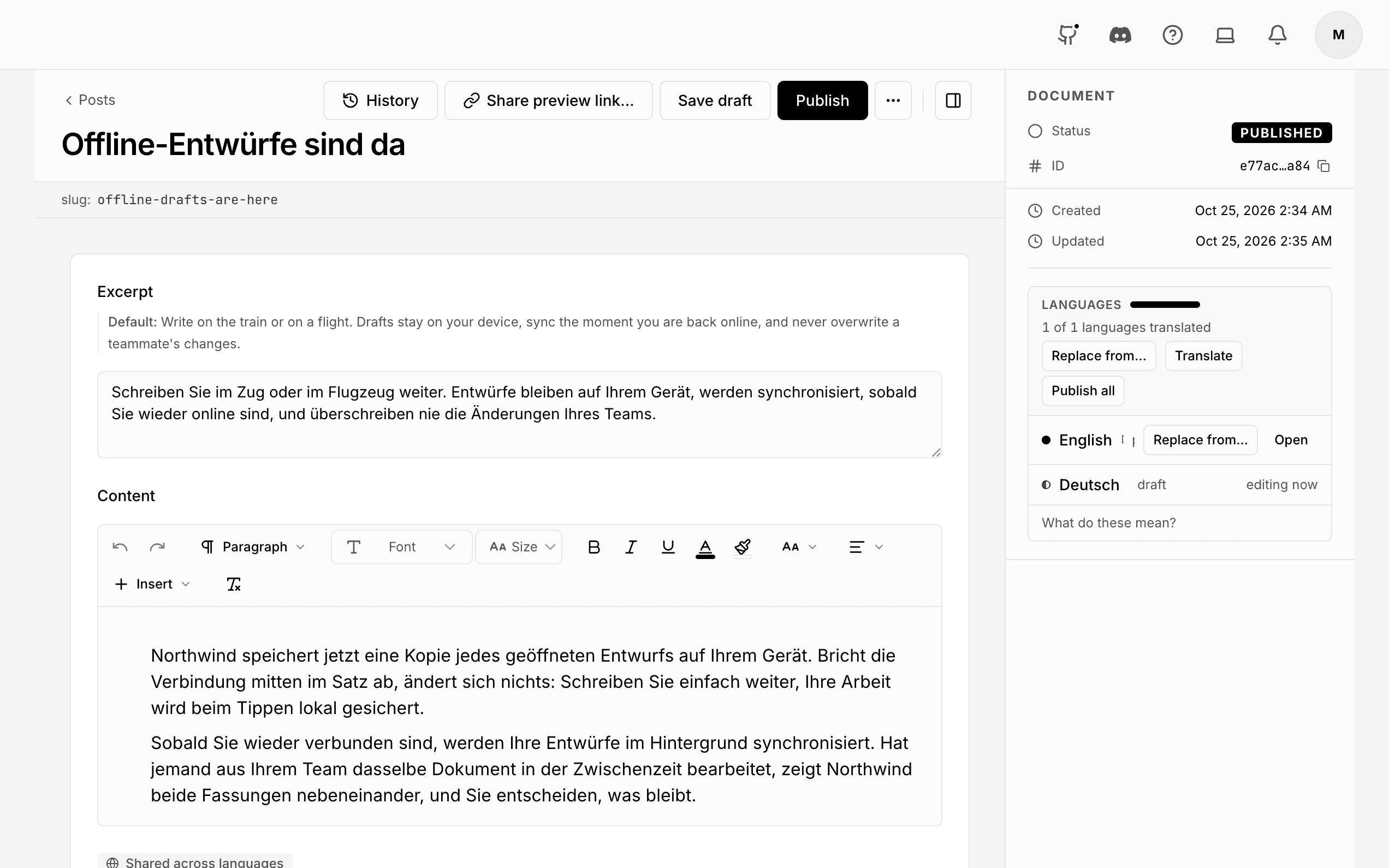
Working drafts
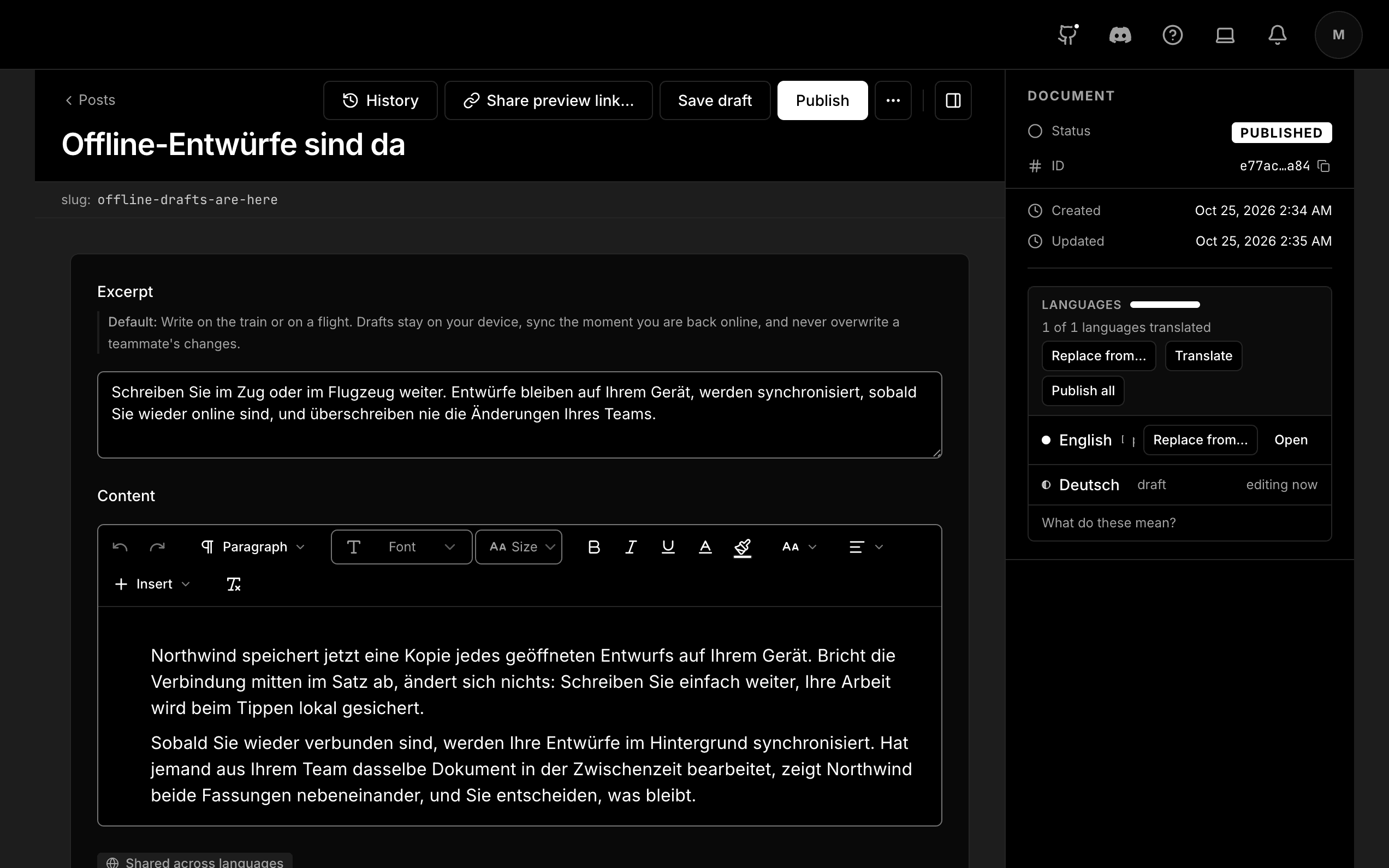
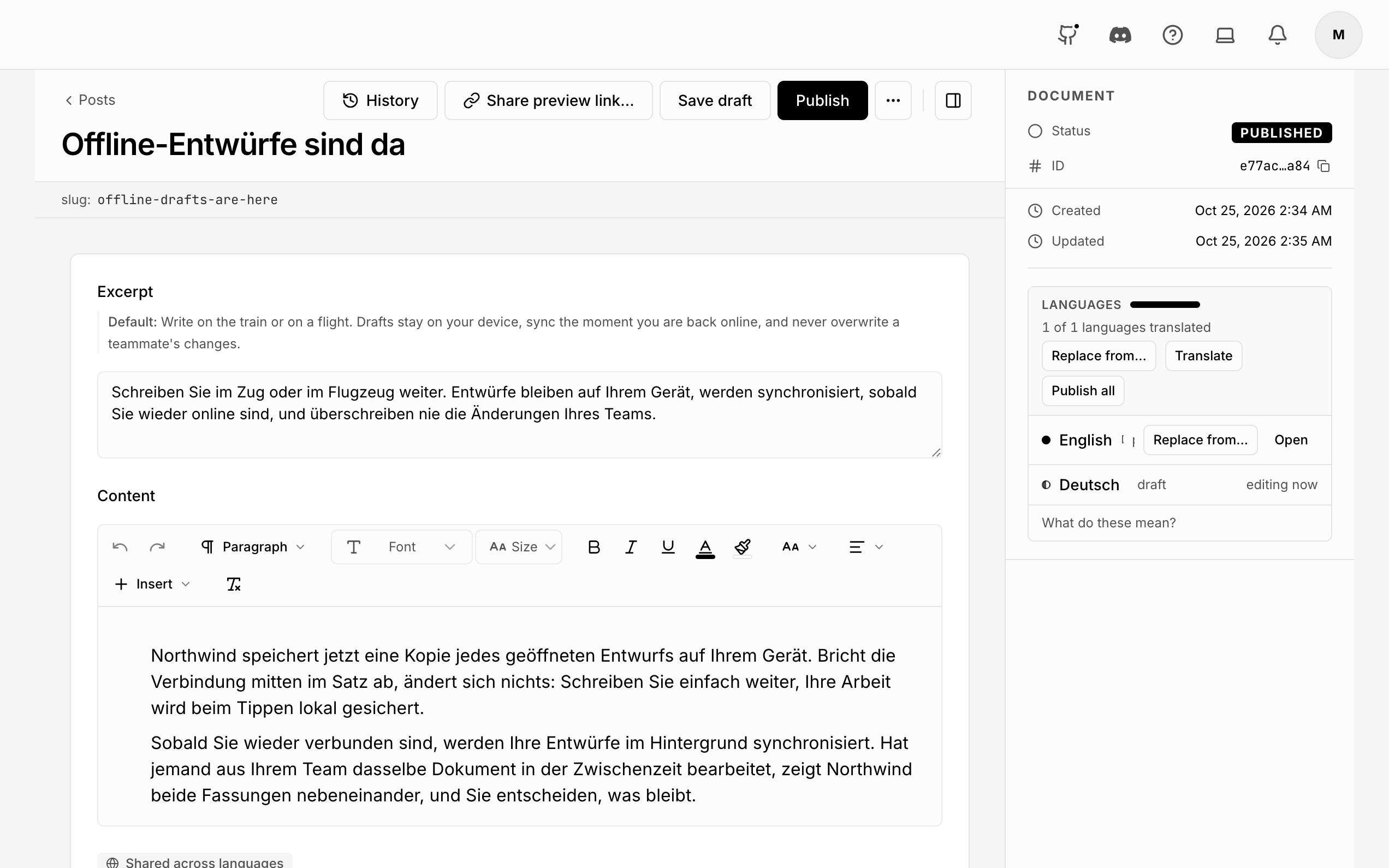
nextlyWorking drafts with autosave, and a side-by-side comparison of two versions of the same language.
Where it stopsWorking draftsAutosave keeps one recovery point per document and author, not per language.
Version history
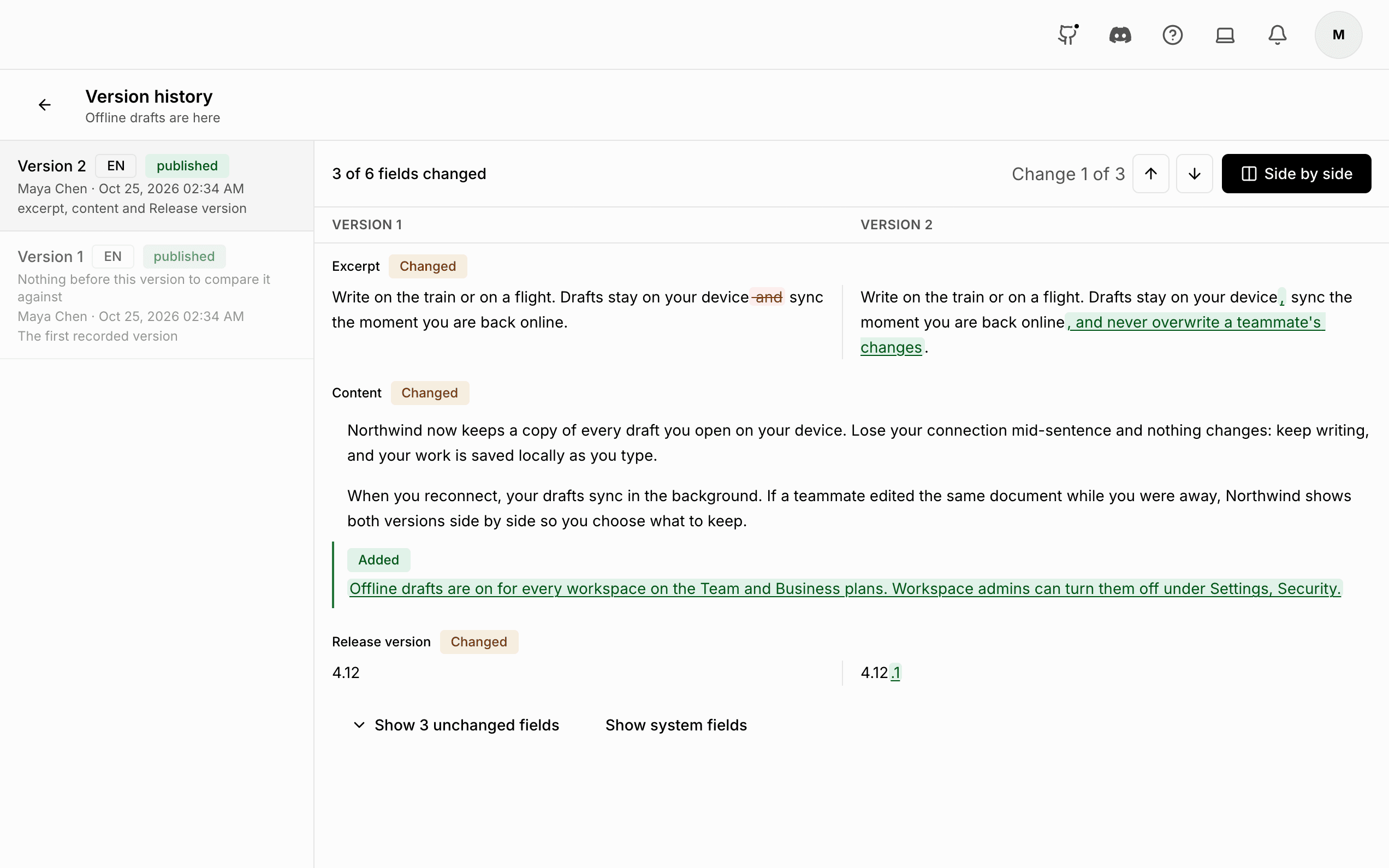
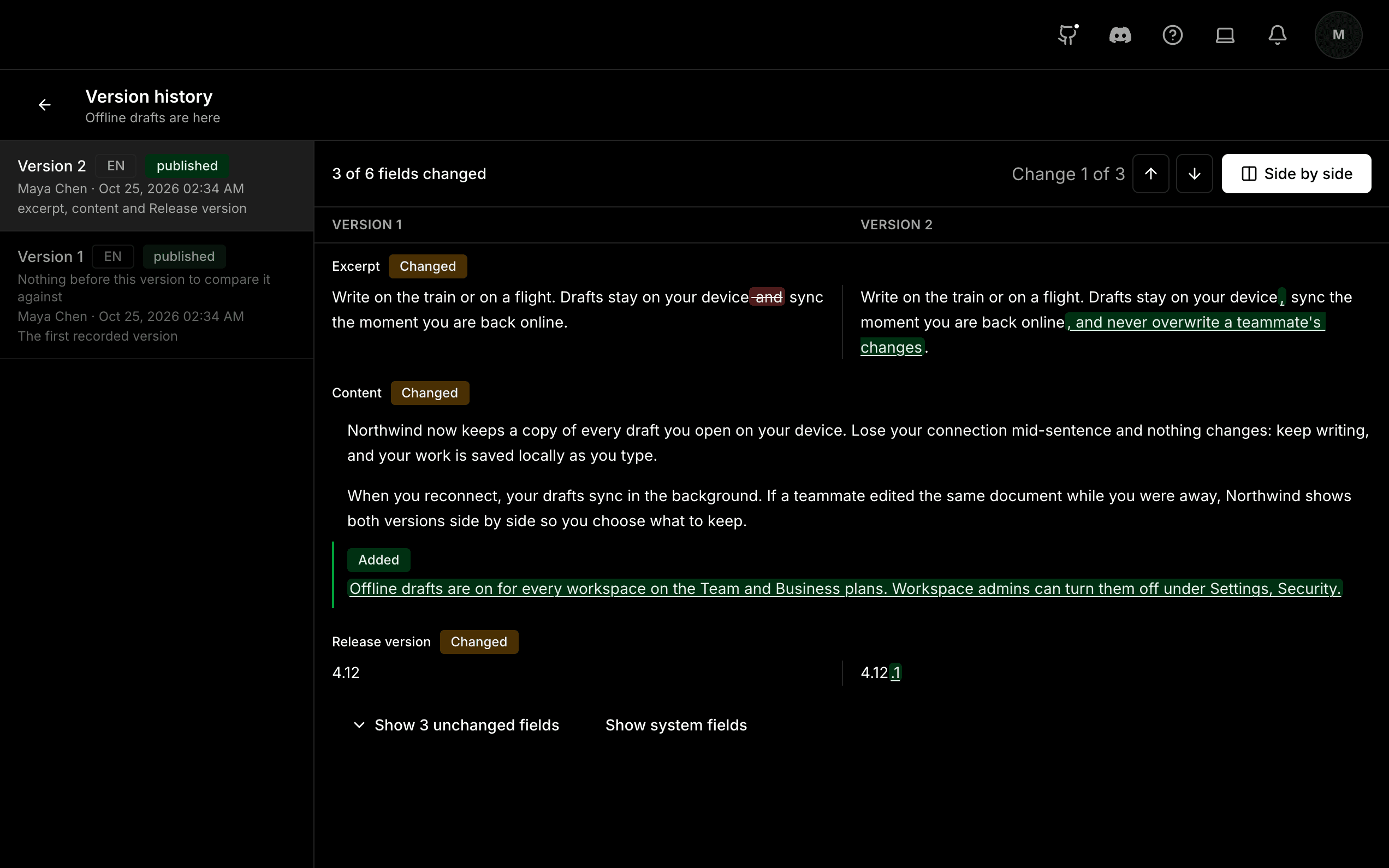
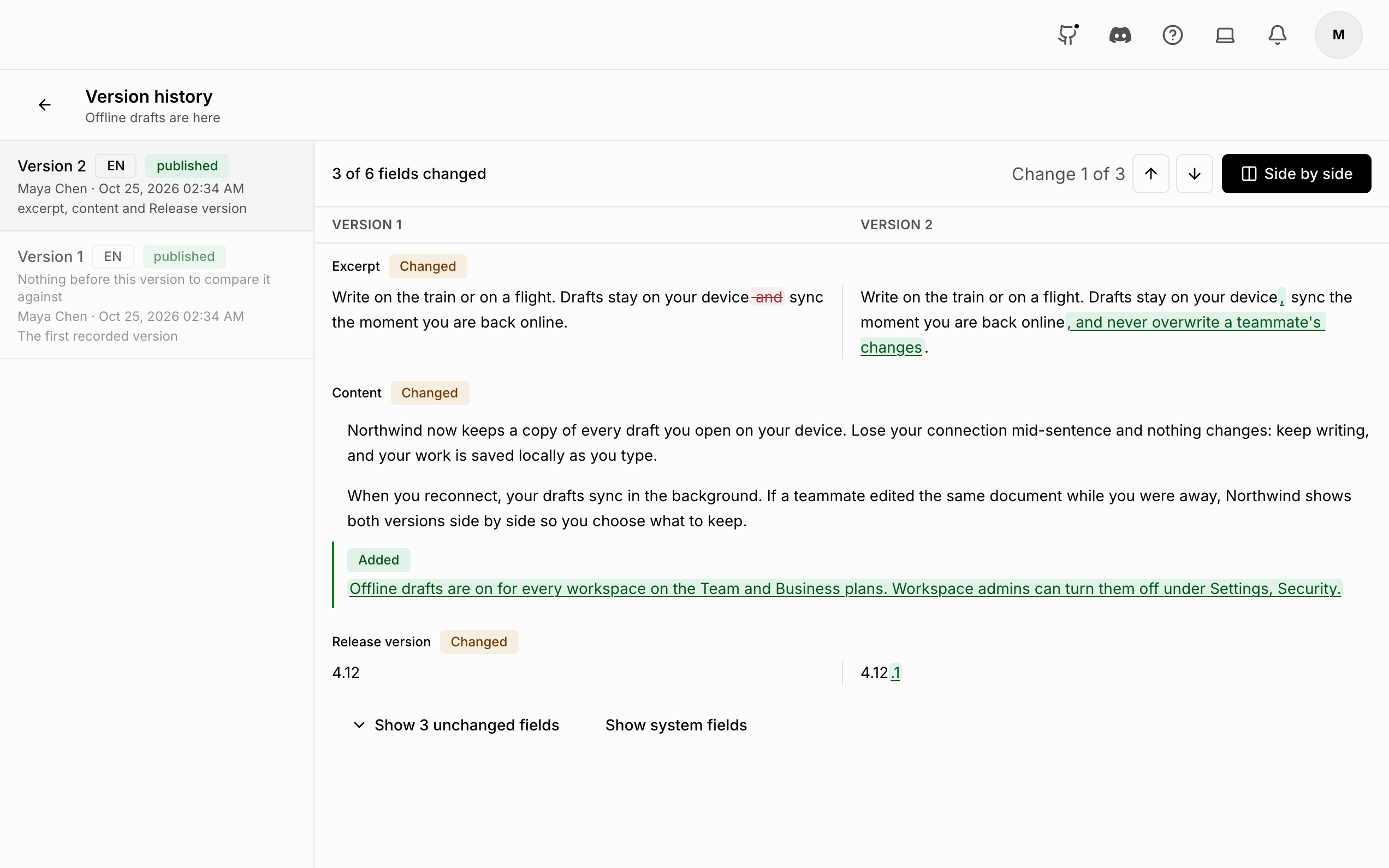
nextlyEvery save that changes the content is recorded as a version, drafts included.
Compare two versions of the same language and restore an earlier one from the admin; restoring saves the current state first.
Where it stopsVersion historyComparing versions across languages is refused.
Content Releases
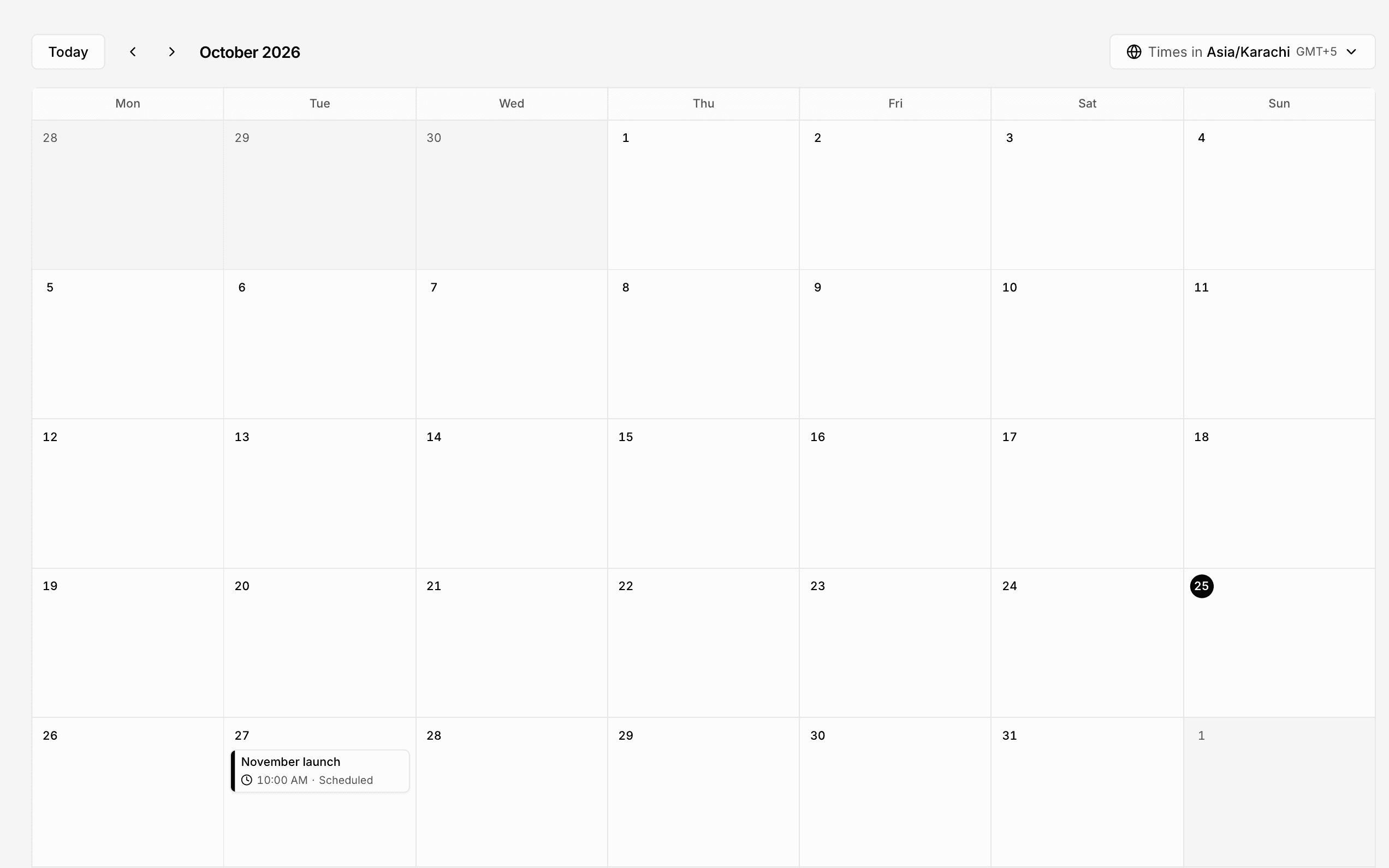
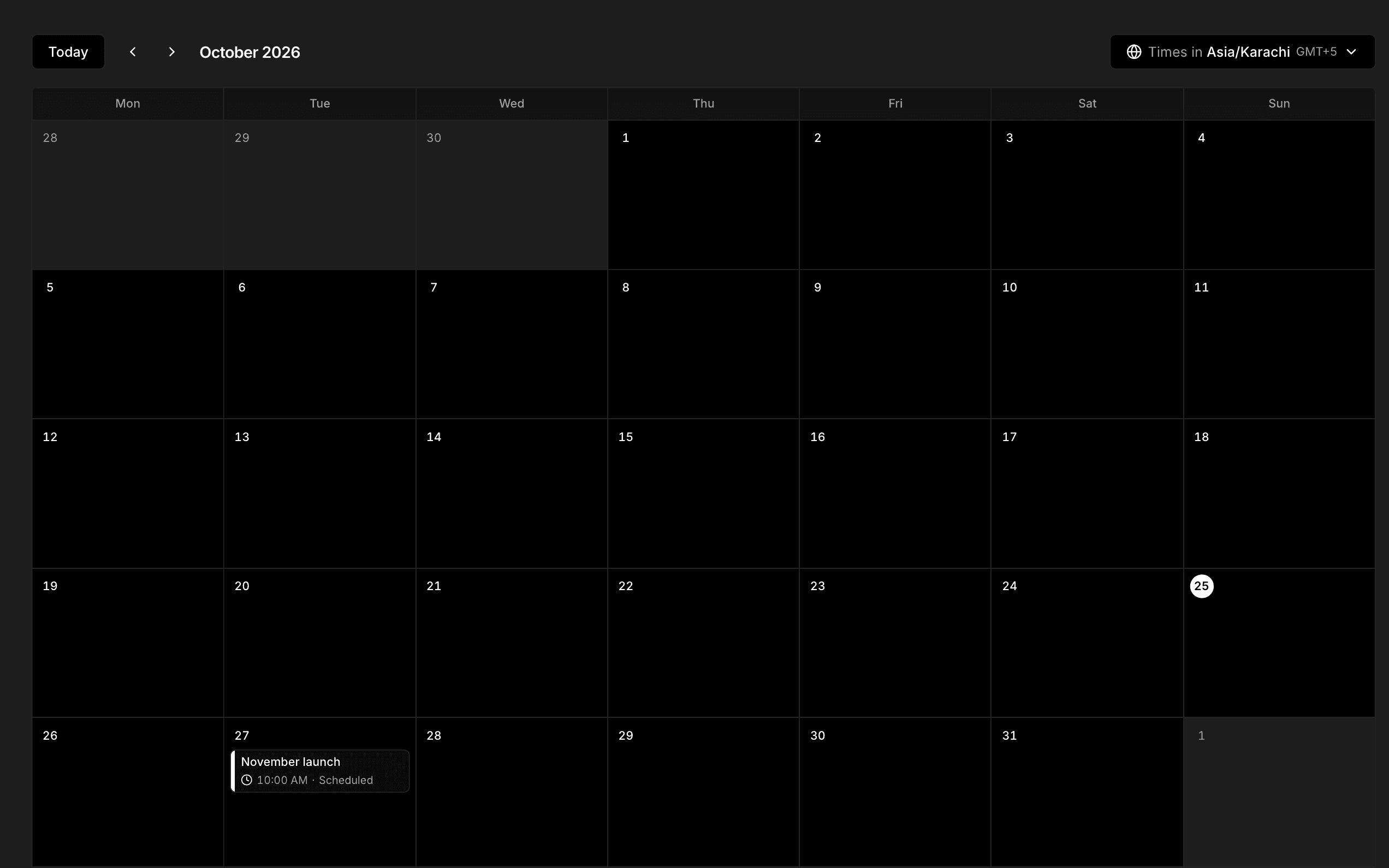
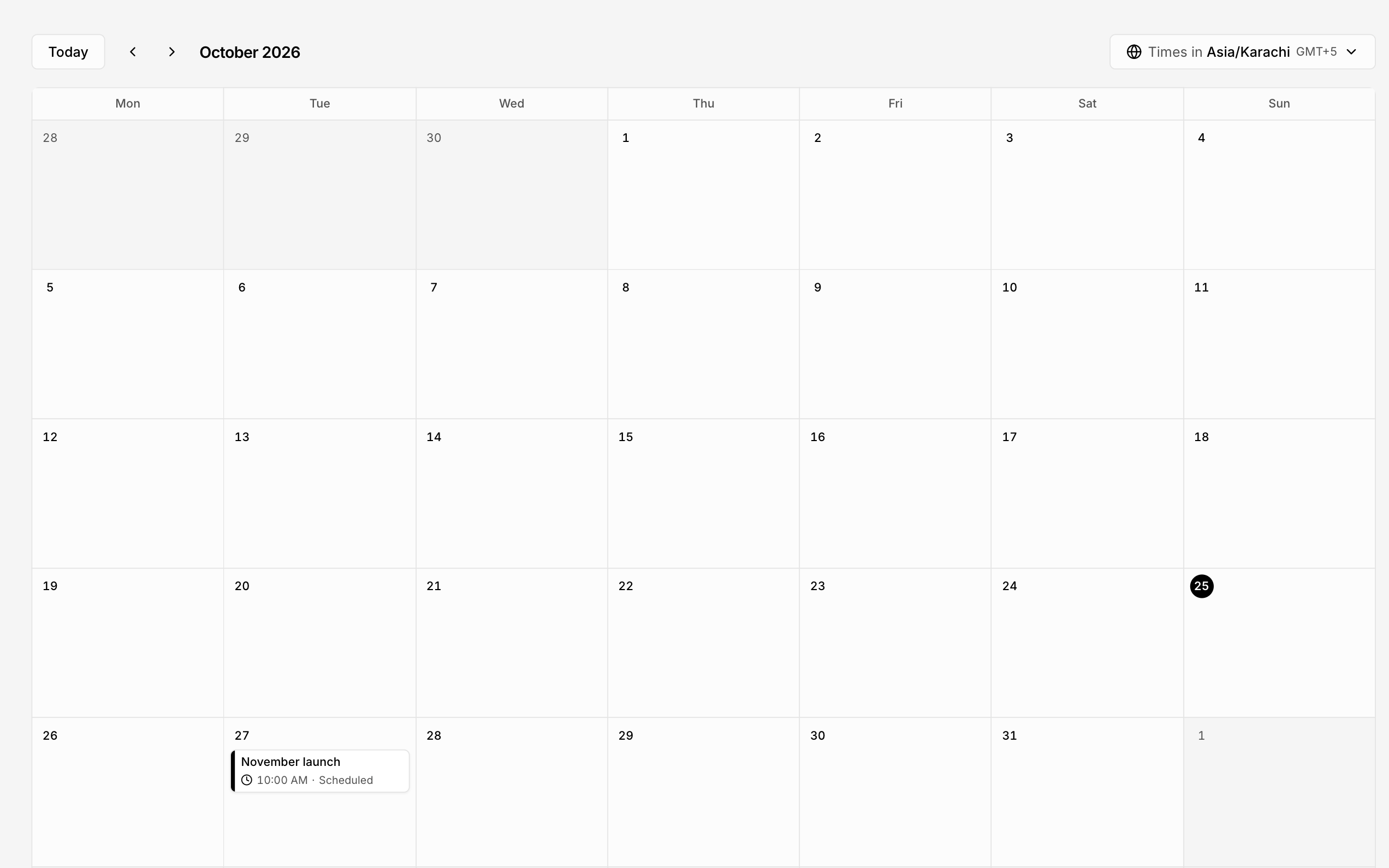
nextlyGroup up to 200 documents' changes into a Content Release and publish or unpublish them together at a time you choose, with a scheduler configured.
Where it stopsContent ReleasesThere is no review-and-approve step.
- no screen
Preview
nextlyPreview saved drafts beside the entry editor, and share a signed preview link that expires.
Where it stopsOn the docs pagePreview - no screen
Presence
nextlySee who else is editing a document, and take over deliberately.
Where it stopsOn the docs pagePresence - no screen
Cache updates
nextlyPages that read through Nextly's cached queries update when their content changes.
Where it stopsOn the docs pageCache updates
Run the admin
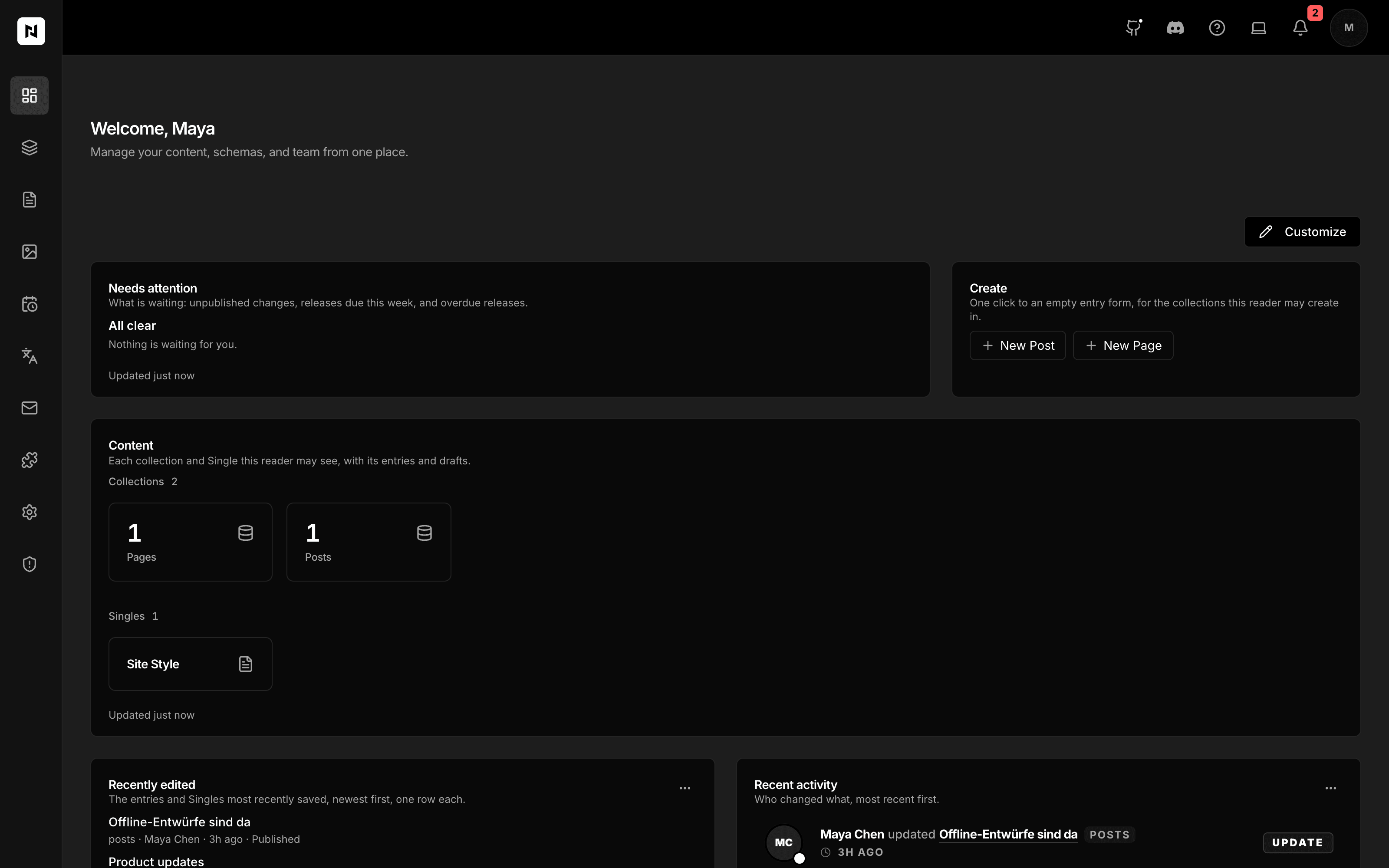
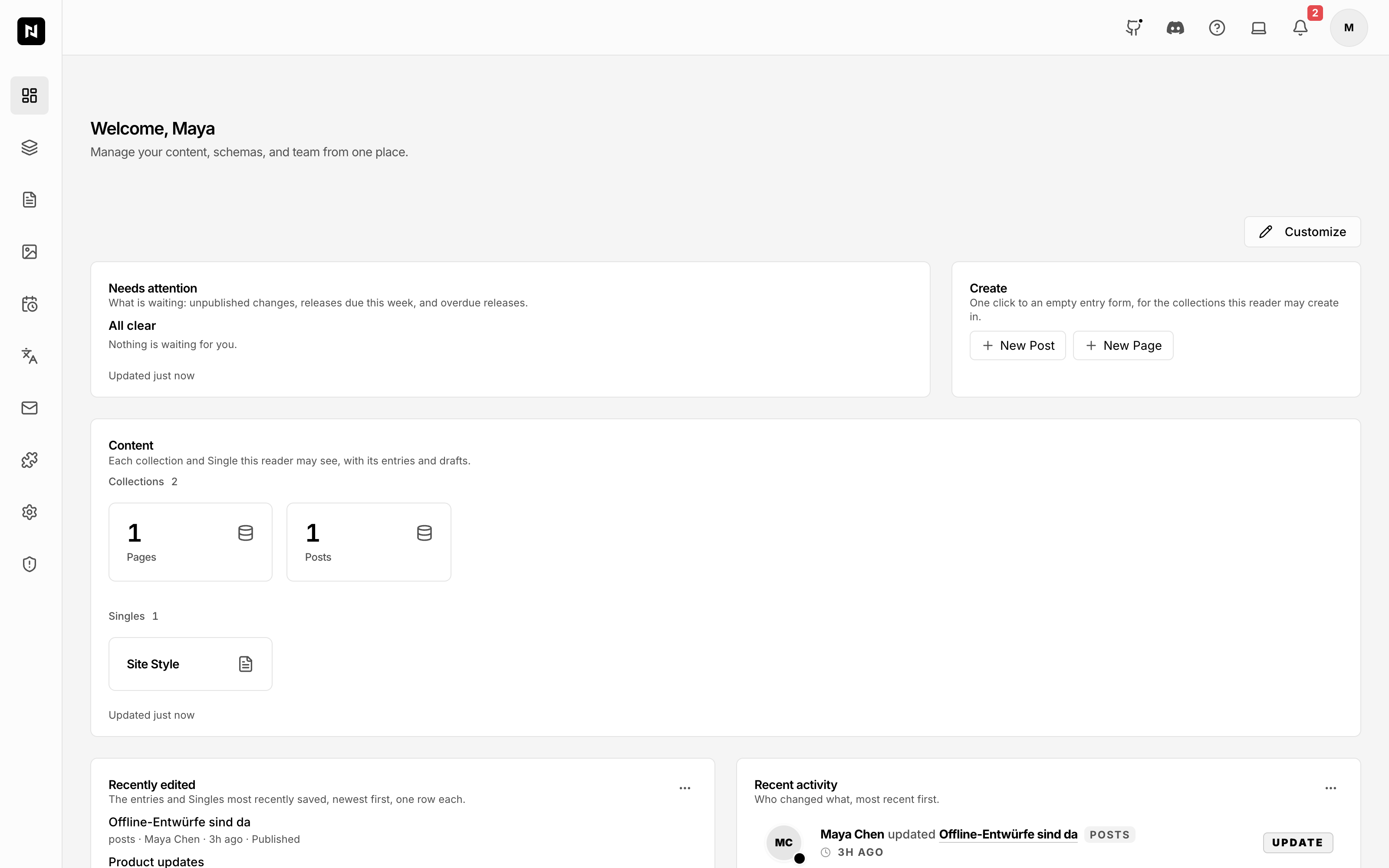
After a developer sets up and deploys Nextly, editors manage content and pages in the admin.
Dashboard
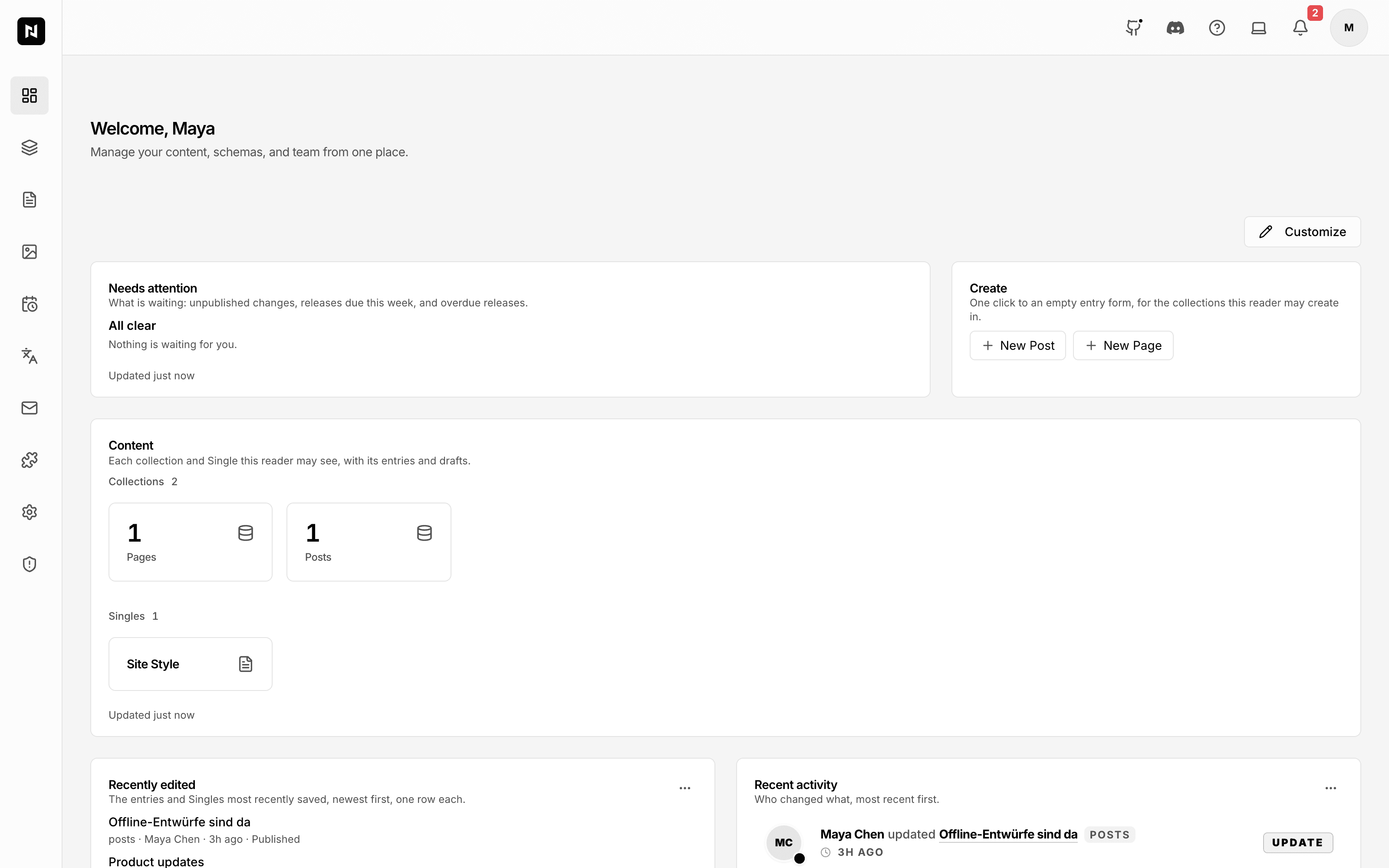
nextlyAdd, remove, drag to reorder and choose the width of each dashboard card.
Dashboard widgets in the admin; plugins can add their own, an experimental part of the plugin SDK.
Where it stopsOn the docs pageDashboard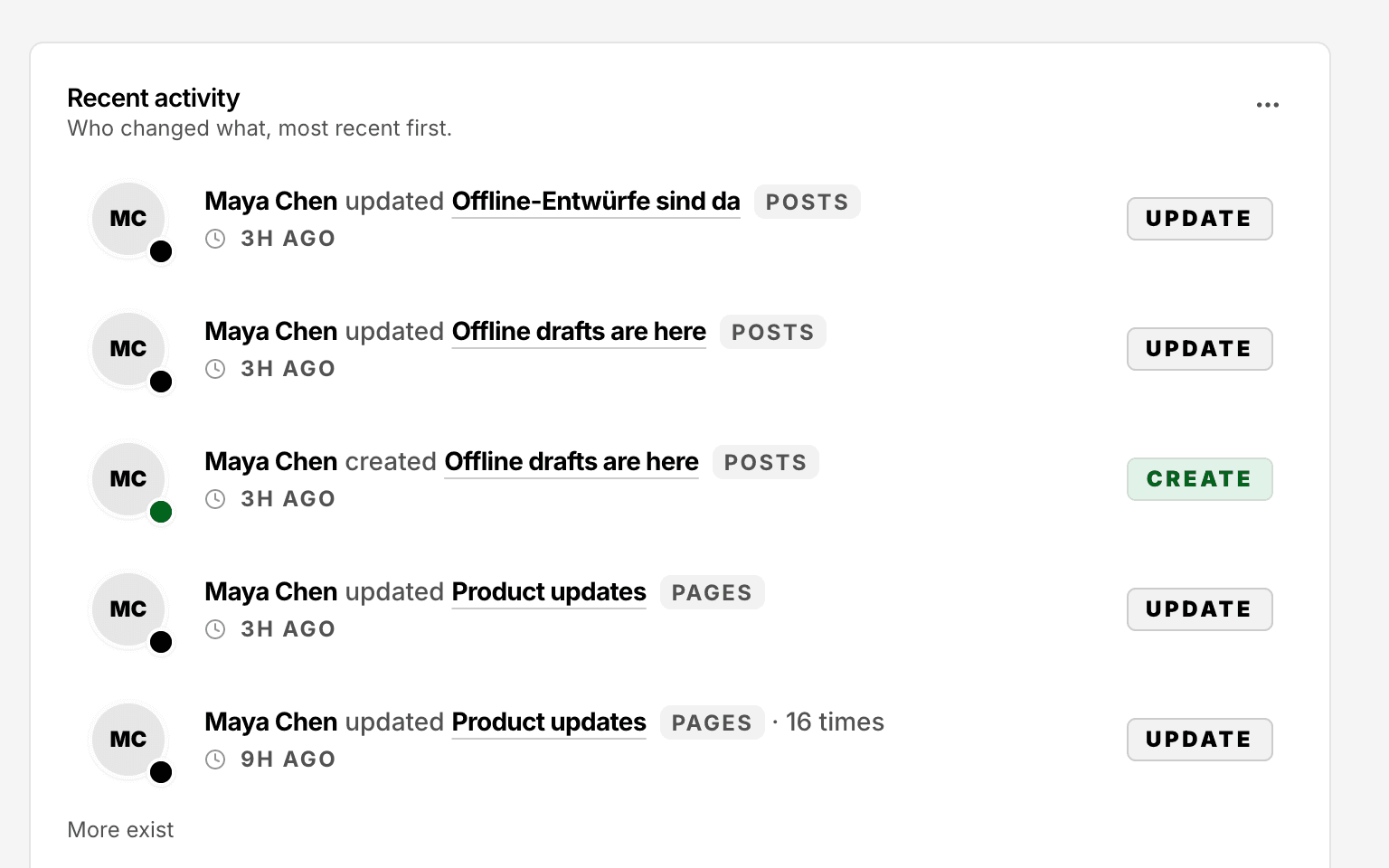
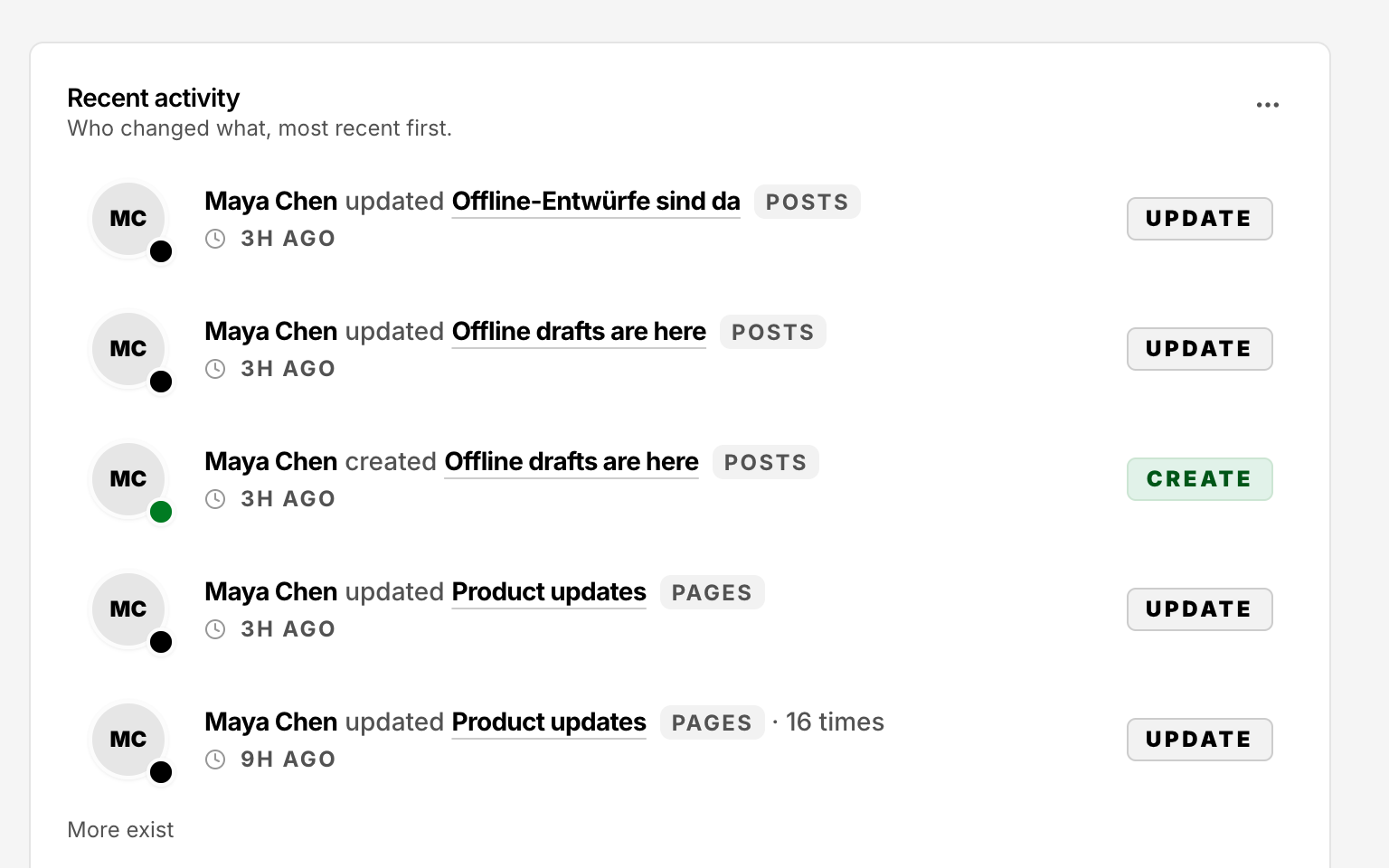
Activity and audit
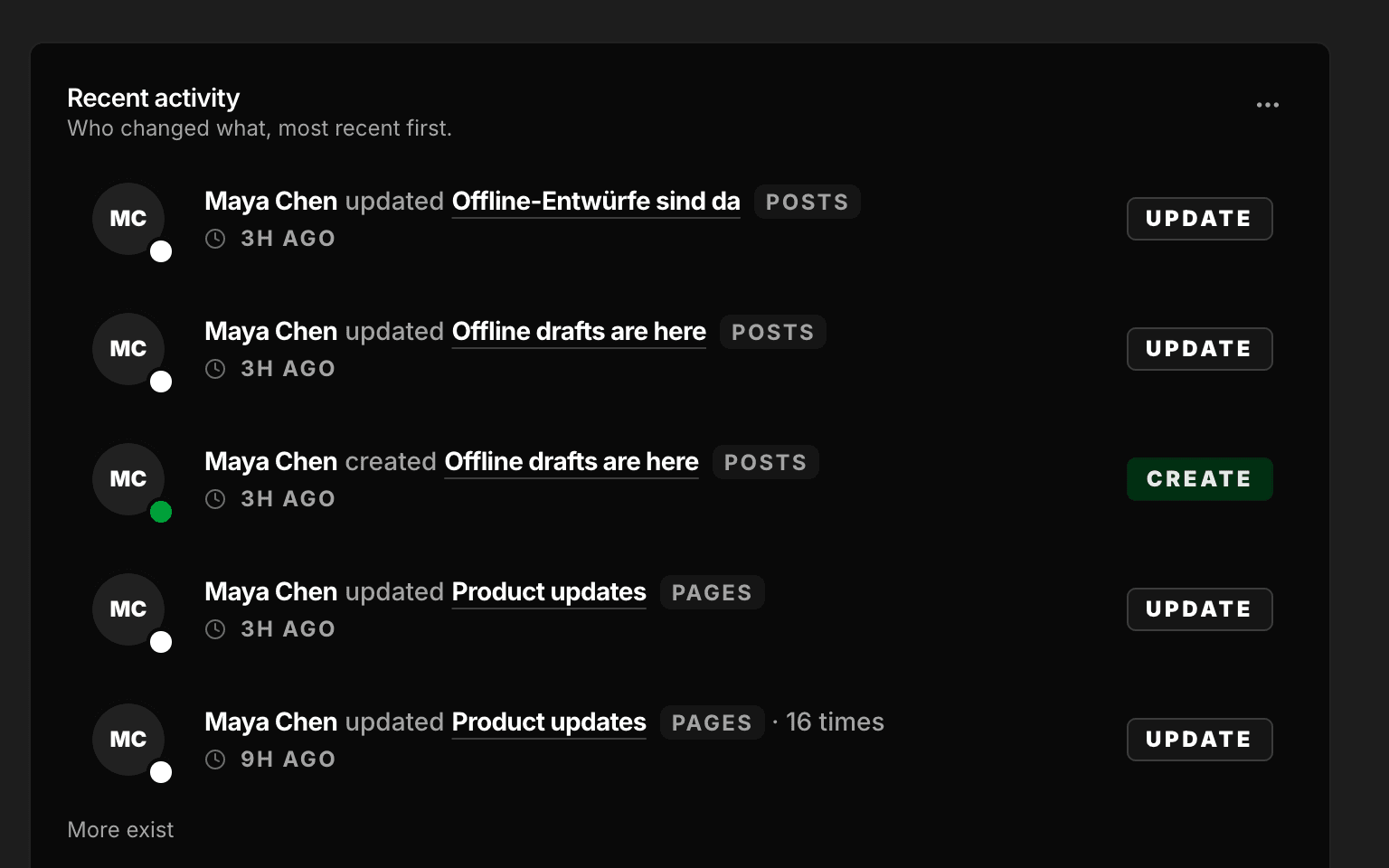
nextlyAn activity feed of who created, changed or deleted entries, and a security audit trail.
Where it stopsOn the docs pageActivity and audit- no screen
Team sign-in
nextlySign-in for your team: email and password, sessions and API keys, stored in your own database.
Where it stopsTeam sign-inIt is not sign-in for site visitors or customers.
- no screen
Roles and permissions
nextlyRole-based permissions for each collection and action, plus field-level read and write rules in code, on a collection's or single's fields, fields inside field groups included.
Access rules you write in code apply over REST and in the admin, including read rules on a collection's or single's own fields.
Where it stopsOn the docs pageRoles and permissions - no screen
First admin
nextlyIn production, the web setup asks for a one-time setup token, printed in the server log, before it creates the first admin.
Where it stopsOn the docs pageFirst admin - no screen
Email
nextlySend email through Resend, SMTP or SendLayer, with templates you edit in the admin.
Where it stopsOn the docs pageEmail
Extend it
Read content straight from your database in your page code (the Direct API), or over REST.
- Direct API and REST: app/blog/page.tsx
Direct API and REST
nextlyThe Direct API runs as trusted server code and skips access rules unless you pass
overrideAccess: false.REST is served under
/admin/api, with API keys.Where it stopsOn the docs pageDirect API and REST - Hooks: collections/posts.ts
Hooks
nextlyHooks in code run before and after a change, a read or a delete.
Where it stopsOn the docs pageHooks - no screen
Webhooks
nextlySigned webhooks for content, media, user and form events, with retries, a delivery log, redelivery and secret rotation.
Where it stopsOn the docs pageWebhooks - no screen
Background jobs
nextlyBackground jobs, run by calling one endpoint from your scheduler.
Where it stopsOn the docs pageBackground jobs - no screen
Rate limits
nextlyWith the rate limit on (the default), every REST request, the admin API included, counts against a budget for whoever is asking: a signed-in session, an API key, or an address. Behind a proxy, set
security.trustProxyso anonymous callers are told apart.Where it stopsOn the docs pageRate limits - no screen
Plugin SDK
@nextlyhq/plugin-sdkAn alpha plugin SDK for schema, services, routes, admin UI and permissions. Parts are marked experimental; pin exact versions.
Where it stopsPlugin SDKAlpha plugin SDK. The
@publicsurface becomes semver-protected at 1.0; until then, pin exact versions. - no screen
Coding agents
create-nextly-appEvery new Nextly project ships with an AGENTS.md and CLAUDE.md written for coding agents.
Where it stopsOn the docs pageCoding agents
Where Nextly is today
Before you start
- Alpha
- Nextly is in alpha. APIs may change before 1.0. Pin exact versions in production.
- Price
- Nextly is MIT licensed and self-hosted. MIT today, and no decision yet about paid offerings.
- Plugins
- The established official plugins: Visual Page Builder, SEO and Form Builder.
Questions
Short answers
Which features are plugins?
The established official plugins: Visual Page Builder, SEO and Form Builder.
Every other feature here names the package it comes from.
Is Nextly free?
Nextly is MIT licensed and self-hosted.
MIT today, and no decision yet about paid offerings.
Does Nextly have a GraphQL API?
No. Nextly offers REST and the Direct API.
Can my app's customers sign in with Nextly?
No. Sign-in is for your team. It is not sign-in for site visitors or customers.